When a high-priority chatbot problem is identified, solutioning turns it into a practical high-level fix: assign responsibility, define the required changes, choose an implementation approach, and estimate development effort. section 3.4.2
A useful solutioning discussion answers four questions:
- Who will implement the fix, including relevant roles and responsibilities? section 3.4.2
- What must change: dialogue responses, contextual understanding, intent recognition, or another capability? section 3.4.2
- How will the change be implemented, including its technical approach and dependencies? section 3.4.2
- How much effort will it require, considering coding complexity, integrations, and external systems? section 3.4.2
From problem to proposed fix
If users cannot complete a chatbot flow, a team might identify a flow redesign as a high-effect, high-effort fix. If intent confusion causes incorrect responses, it might examine imbalanced training data and differences between training examples and real queries before choosing a remedy.
Figure 3.17 An effect-effort matrix visualizes the relationship between the effort required and the potential effect of a proposed change.
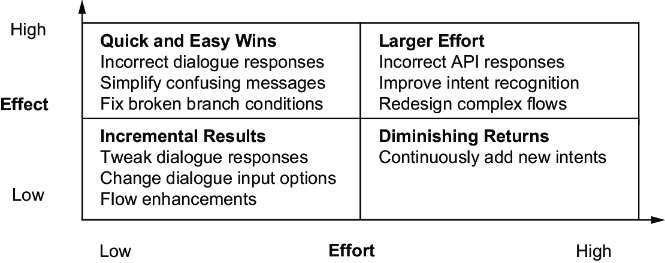
Use the effect-effort matrix to compare proposed changes and focus attention on improvements with the greatest potential effect for the required effort. section 3.4.2
