liveBook · Manning

Specification-driven development

As explained in Designing AI Agents

A software-development approach in which structured specifications guide implementation and define intended behavior.

Specification-driven development makes structured specifications the constraints for agent-generated code. Engineers define acceptable behavior, choose patterns, constrain risky actions, and measure reliability; the agent generates candidate implementations. section 1.4.1

Structure specifications at two levels:

  • A proposal states what a change does and why; a design describes how; a task list sets the order. section 1.4.1
  • A durable project specification records constraints that persist across tasks; a change specification governs one change. section 1.4.1
Figure 1.5 The two creations in agent engineering: specification as mental creation, running agent as physical creation.
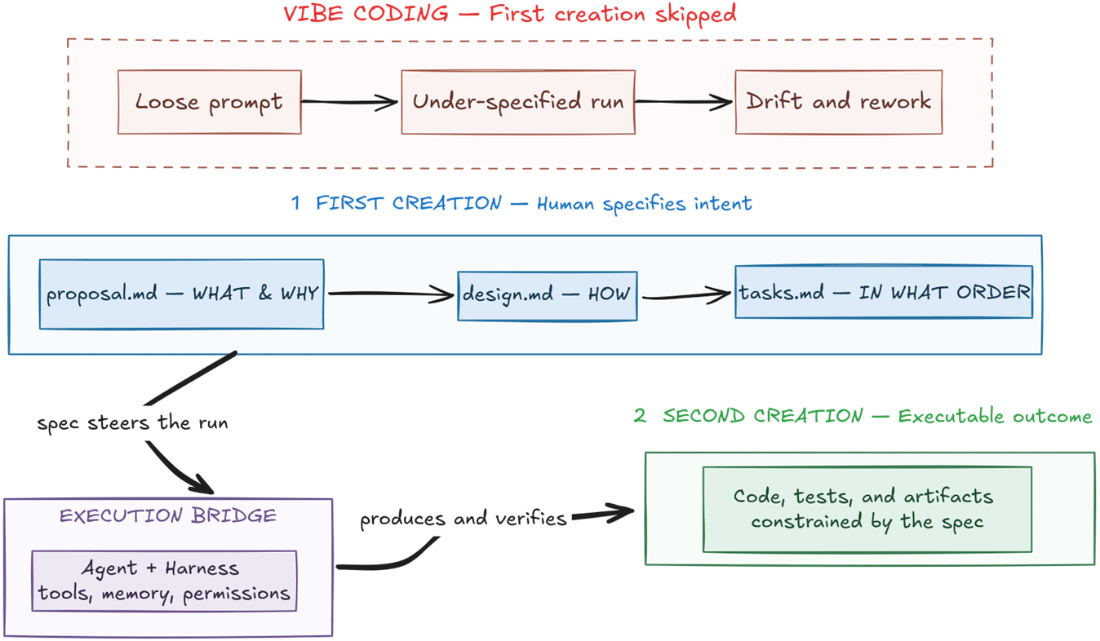
The figure contrasts the specification as the mental creation with the running agent as the physical creation. section 1.4.1

How Designing AI Agents covers it

How deep it goes
Defines proposals, designs, and task lists, and distinguishes durable project constraints from change-specific specifications.
Examples
Uses a rollout change to distinguish a durable specification for the authoritative utility from a change-specific plan.
What you can do after
Apply it by organizing a change into a proposal, design, and ordered tasks, then constraining and evaluating implementation.
How it connects
Connects agent engineering with software specifications, implementation constraints, and reliability evaluation.

Also explained in

Compare how 4 books explain specification-driven development →

Related concepts

This explainer was generated by Manning's knowledge graph from the text of Designing AI Agents. The section links point to the parts of the book it draws on.

