liveBook · Manning

Split-brain

As explained in Elasticsearch in Action, Second Edition

A split-brain scenario is a distributed-system failure in which isolated node groups independently believe they are the authoritative cluster.

A split-brain scenario occurs when network-isolated node groups independently act as the authoritative cluster. Each group can accept requests, but changes made in one group remain invisible to the other, creating data discrepancies. section 14.6.5

Two nodes, two masters

Node A is the master after Node B fails. While Node B reboots, network connectivity is severed. Unable to see Node A, Node B assumes the master role. Both nodes then operate independently, and requests sent to either node affect only that node's view of the data. section 14.6.5

Prevent split-brain cluster formation by:

  • Providing at least three master-eligible nodes, so the cluster can use a quorum when electing a master or committing cluster state. section 14.7
  • Recognizing that a two-node arrangement can leave one isolated node believing it should become master after a failure or network problem. section 14.6.5
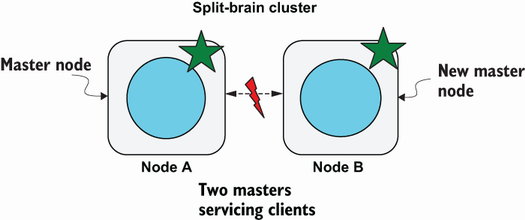
Figure 14.17 Split-brain cluster: a cluster with two masters

Diagram of a split-brain cluster in which two isolated nodes both act as masters. section 14.6.5


How Elasticsearch in Action, Second Edition covers it

How deep it goes
Explains the failure sequence, independent request handling, quorum role, and three-node mitigation without covering implementation details.
Examples
Uses a two-node cluster where Node B loses contact with master Node A and independently becomes master.
What you can do after
Evaluate cluster topologies and identify why at least three master-eligible nodes reduce split-brain risk.
How it connects
Connects master nodes, quorum, cluster state, node failures, and network connectivity.

Also explained in

Compare how 3 books explain split-brain →

Related concepts

This explainer was generated by Manning's knowledge graph from the text of Elasticsearch in Action, Second Edition. The section links point to the parts of the book it draws on.
