A star schema organizes analytics data around a central fact table connected directly to surrounding dimension tables. It uses strategic denormalization to make business questions easier to query, interpret, and answer. section 11.4.2 section 11.5
Use the schema to separate business events from the entities and attributes that describe them:
- Fact tables record numeric information about important processes or events, such as transactions, clicks, or page views. section 11.4.2
- Dimension tables describe related entities, such as customers, users, or employees, with properties that may be combined, derived, or aggregated. section 11.5
- Denormalization reduces joins and repeated calculations, but appropriate designs require knowledge of organizational processes, priorities, and stakeholder needs. section 11.4.2 section 11.4.3
Designing a schema from normalized data
Starting with customer, product, utility, and activity tables, identify primary and foreign keys, choose business actions for fact tables, choose business entities for dimensions, and draw their relationships. Validate the design with stakeholders and other analysts. section 11.4.3
Figure 11.21 Star schemas have fact tables at the center connected to dimensions with related attributes.
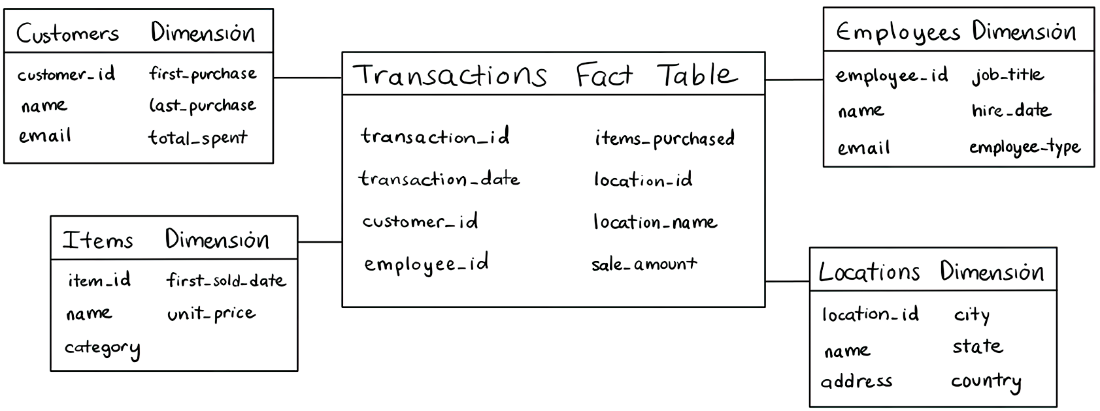
A visual model places the fact table at the center and connects it to dimensions containing related attributes. section 11.4.2
