liveBook · Manning

Status quo bias

As explained in Collaborative Software Design: How to facilitate domain modeling decisions

A cognitive bias involving preference for the current state of affairs over changing to an alternative.

Status quo bias is the tendency to prefer the current state of affairs over a new option, even when the alternative may be better. section 7.3.1

In collaborative modeling, the bias can keep participants using familiar discussion habits instead of recording new examples or visualizing unfamiliar scenarios. section 7.3.1

Returning to familiar methods

During an Example Mapping session about when to lock an agenda, participants struggled to create new examples because they had already EventStormed the timeline. They returned to discussion without visualizing, assuming the existing EventStorm was sufficient. section 7.3.1

Figure 7.4 An example of how an Example Mapping looked at BigScreen. The groups are divided and are using index cards on the table to collaboratively model and discover new scenarios and acceptance criteria.
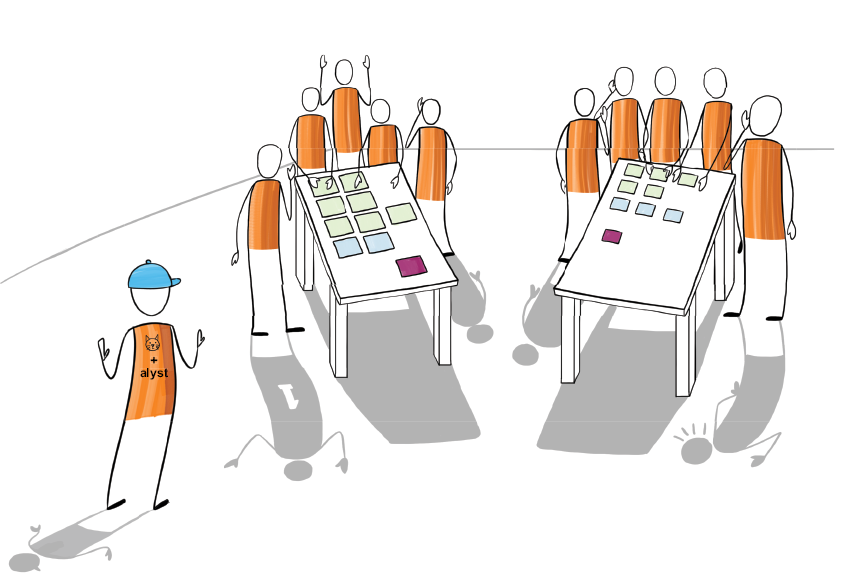
Use the collaborative Example Mapping arrangement to inspect how groups externalize scenarios and acceptance criteria instead of relying on familiar discussion patterns. section 7.3.1

How Collaborative Software Design: How to facilitate domain modeling decisions covers it

How deep it goes
Defines the preference for existing conditions and illustrates its effect in an Example Mapping session, without developing a broader intervention method.
Examples
Uses an agenda-locking timeline, EventStorming, Example Mapping, index cards, and missing visualized use cases.
What you can do after
Diagnose when participants favor familiar discussion habits over visualizing new scenarios during collaborative modeling.
How it connects
Connects status quo bias with availability bias, anchoring effect, confirmation bias, EventStorming, and Example Mapping.

This explainer was generated by Manning's knowledge graph from the text of Collaborative Software Design: How to facilitate domain modeling decisions. The section links point to the parts of the book it draws on.