A stimulating environment is a social, cultural, or physical setting that renews energy and invites exploration and creative activity. It is less a universal recipe than a good fit between people, their work, and the possibilities around them. A place can feel creatively stifling to one person and full of momentum to another. section 3.2.3 section 7.5
Changing environments can change the people and ideas available to you. Jean Tinguely described moving from Basel to Paris as becoming “a fish in water,” finding an avant-garde network that felt more fluid and energizing. For a programmer, the useful question is not simply “Which office looks creative?” but “Where can I encounter ideas, collaborators, and conditions that help my work move?” section 3.2.3 section 7.5
Creative spaces can support different modes of work rather than forcing every activity into one room:
- Provide personal or focus space for concentrated work, alongside collaboration space for working with others. section 7.5.1
- Make room for experimentation, exhibition, presentation, and sharing so ideas can be built and seen. section 7.5.1
- Include intermission, relaxation, play, virtual work, and incubation or reflection where appropriate. section 7.5.1
More stimulation is not automatically better. Activity, playful perks, and open layouts can become distractions or empty signals. A useful environment offers incentives without constant disruption, appeals to imagination, and respects that some people want bustle while others need a closed door. section 7.5 section 7.5.1
A hybrid creative space
The Salk Institute is presented as a setting designed for cross-pollination of ideas without continual interruption: free-flowing laboratories support connection, while the overall arrangement still leaves room for work. Its lesson is to separate and connect activities deliberately, not merely decorate a workplace. section 7.5.1
Figure 7.6 The Salk Institute courtyard showcasing a mirrored structure containing strategically placed laboratories, utilities, office spaces overlooking the Pacific Ocean, and study areas. Photo courtesy of Adam Bignell, Unsplash.
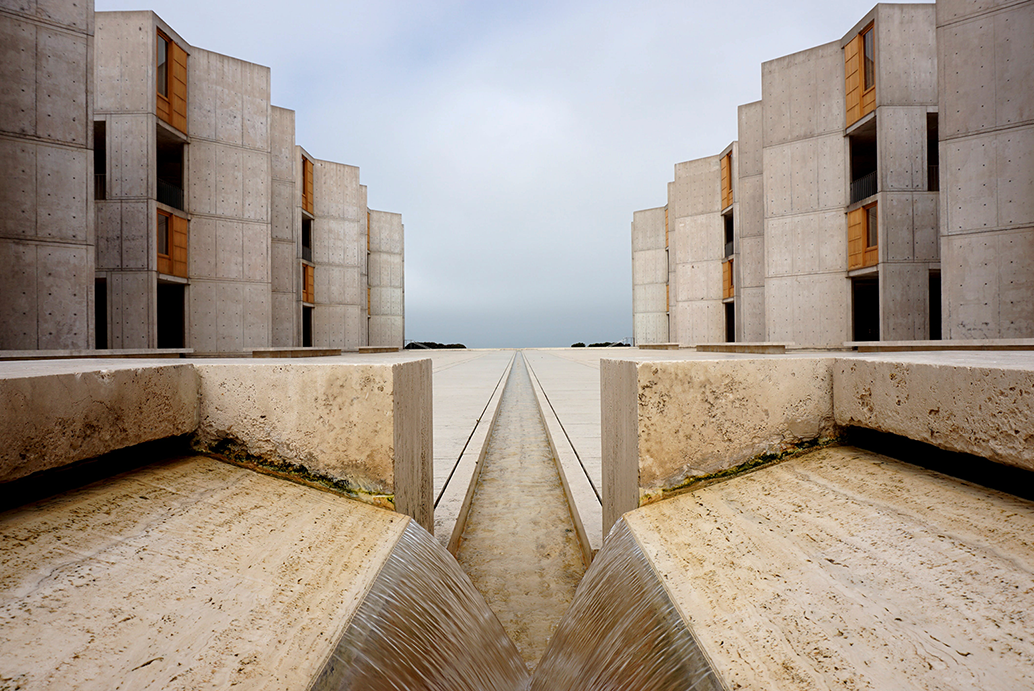
The courtyard view makes the hybrid-space idea concrete: laboratories, offices, utilities, and study areas form a deliberately arranged environment rather than a single generic room. section 7.5.1
