liveBook · Manning

Strangler pattern

As explained in Google Anthos in Action

The strangler fig pattern incrementally replaces parts of a legacy system with new implementations until the legacy system is reduced or removed.

The strangler pattern incrementally replaces a legacy application with new implementations, commonly while refactoring toward microservices. Each extracted capability delivers value in a production release, narrows deployment scope, and reduces modernization risk compared with rewriting the entire application first. section 16.2.1

Apply the pattern by:

  • Selecting features that support the application and are easy to decouple. section 16.2.1
  • Evaluating candidates across business process, design and development, operations, and people and teams. section 16.2.1
  • Extracting the chosen logic, integrating it with the existing application, and releasing the change incrementally. section 16.2.1
  • Considering centralized authentication and authorization as a possible early extraction target. section 16.2.1
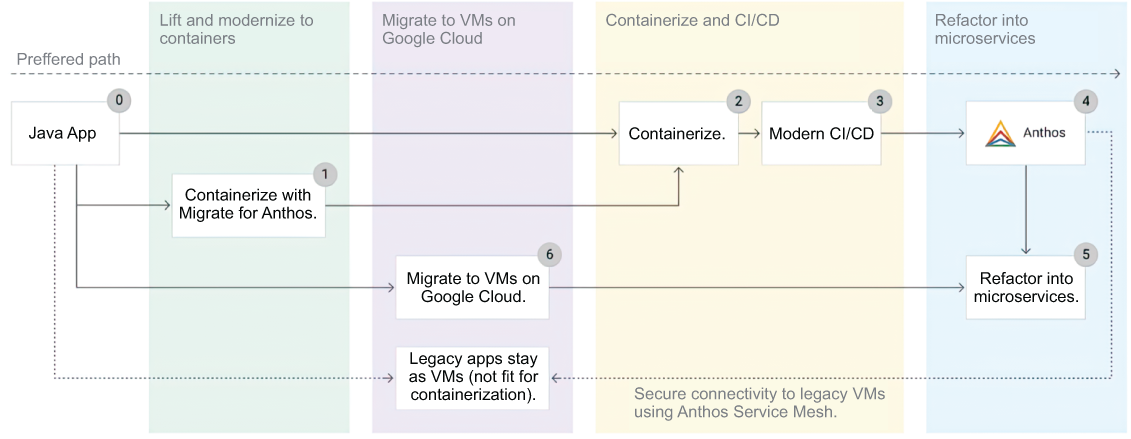
Figure 16.2 Modernizing a Java application
16-02

Use the modernization diagram to visualize how a Java application can move incrementally away from its legacy design. section 16.2.1


How Google Anthos in Action covers it

How deep it goes
Explains the rationale, candidate-selection heuristic, and evaluation dimensions, but does not detail routing or integration mechanics.
Examples
Uses centralized authentication and authorization as an example of an easily decoupled feature.
What you can do after
Apply incremental extraction to reduce modernization risk and deliver architectural improvements through successive production releases.
How it connects
Connects legacy applications, microservices architecture, service boundaries, automated testing, and automated deployment.

Also explained in

Compare how 4 books explain strangler pattern →

Related concepts

This explainer was generated by Manning's knowledge graph from the text of Google Anthos in Action. The section links point to the parts of the book it draws on.

