A stress state describes a user who feels overwhelmed and cannot process information as clearly as usual. Designing for this state means identifying barriers and simplifying the journey so the user can complete an urgent task. section 5.2.2
Urgent, high-pressure situations
A banking user may be watching fraudulent transactions drain an account. Someone else may need to book an urgent flight after a death, or report a stolen phone and cancel service. A journey map for each situation focuses on reducing obstacles when clear thinking is difficult. section 5.2.2
Use the stress-state scenario to guide journey-mapping decisions:
- Identify what the user is trying to accomplish and how their emotional state may affect the journey. section 5.2.2
- Locate negative experiences that could make the user abandon the journey, then remove or reduce those barriers. section 5.2.2
Figure 5.7 A simple user journey map that depicts the scenario of a user booking a train ticket and their experience with the app. User journey maps can be created with tools such as Figma, Illustrator, or even Microsoft Word.
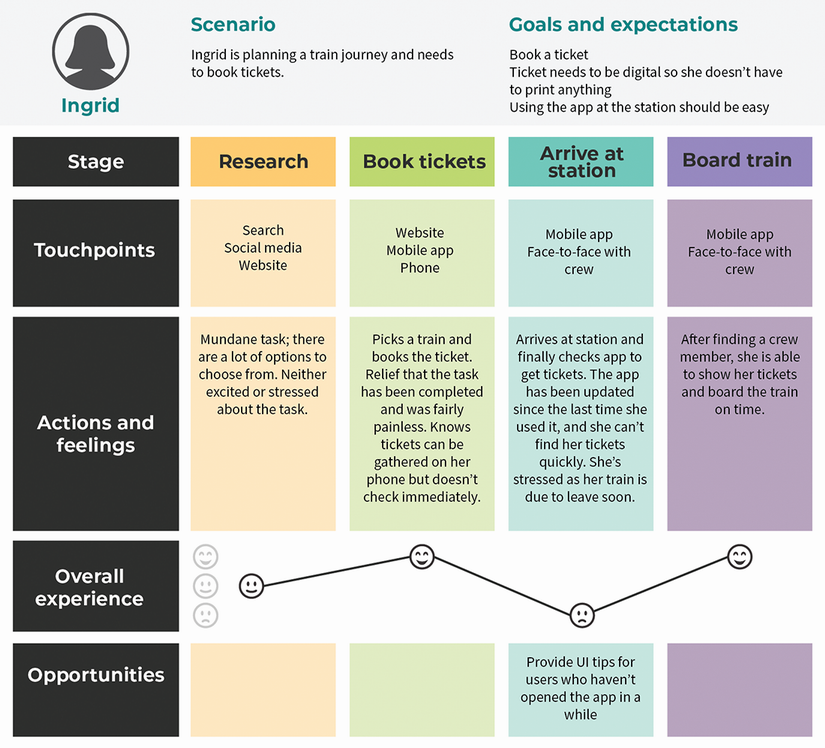
Use a user journey map to visualize stages, experiences, and obstacles across a task. section 5.2.2
