liveBook · Manning

Structural role embedding

As explained in Graph Algorithms for Data Science

A role-based embedding is a node representation that preserves similarity in structural or functional network roles rather than necessarily node attributes.

Structural role embedding represents nodes so that nodes with similar positions or functions in a network become close in embedding space, even when their attributes differ. section 9.1.1

Use structural role embeddings when the network position matters more than shared attributes or community membership:

  • Place nodes with similar structural functions near one another, such as two bridge nodes connecting separate communities. section 9.1.1
  • Analyze functional positions in coauthorship networks or identify roles played by routers in an internet network. section 9.1.1
  • Favor breadth-first-style random walks for structural-role embeddings; depth-first-style walks tend toward community- or homophily-based embeddings. section 9.3.2

Bridge roles in a network

Suppose nodes D and F each connect two communities. Although they may not share attributes, their comparable bridge roles make them close in the structural embedding. RolX provides one algorithmic approach; node2vec can combine structural-role and homophily-oriented designs. section 9.1.1
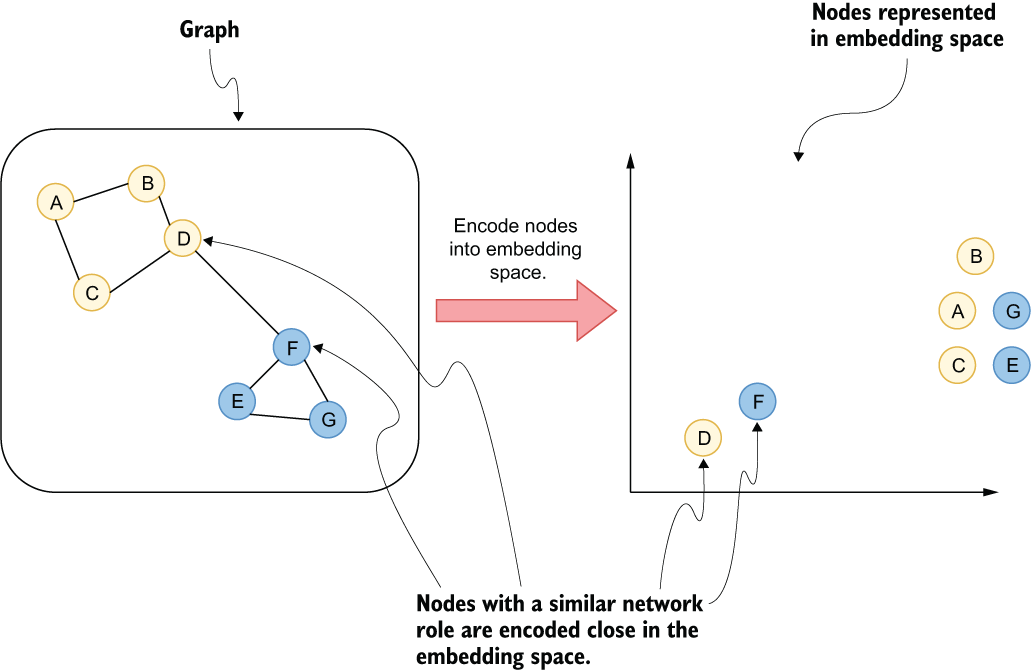
Figure 9.5 Structural roles approach to node embedding
09-05

Visualize how nodes are encoded near one another according to their network structural roles. section 9.1.1

How Graph Algorithms for Data Science covers it

How deep it goes
Explains role-based similarity and random-walk guidance, but stops short of implementation details or mathematical derivation.
Examples
Uses bridge nodes, coauthorship networks, internet routers, RolX, and random-walk behavior as concrete examples.
What it assumes
Assumes familiarity with node roles and introduces the distinction between structural-role and homophily-based embeddings.
What you can do after
Evaluate whether structural-role, homophily-based, or combined embeddings fit a downstream network-analysis task.
How it connects
Connects node embeddings with network structural roles, homophily, node2vec, RolX, random walks, breadth-first search, and depth-first search.

Related concepts

This explainer was generated by Manning's knowledge graph from the text of Graph Algorithms for Data Science. The section links point to the parts of the book it draws on.