Supplemental guidance offers optional ways to address accessibility barriers beyond WCAG’s formal requirements. It is not needed for conformance, but can help make web apps more usable for more people, including people with learning and cognitive difficulties. section 1.5.1
Make focus easier to see
Browsers highlight focused elements by default. Custom CSS can make that focus indicator even more visible, offering an enhancement beyond the minimum requirement. section 1.5.1
Figure 1.2 This image illustrates the various components in WCAG 2.2. Guidelines are organized under four principles. Each of the 13 guidelines includes normative success criteria: the requirements used to determine conformance at levels A, AA, or AAA. WCAG also provides informative supporting material, including techniques, understanding documents, testing rules, and additional guidance to help explain and apply those requirements.
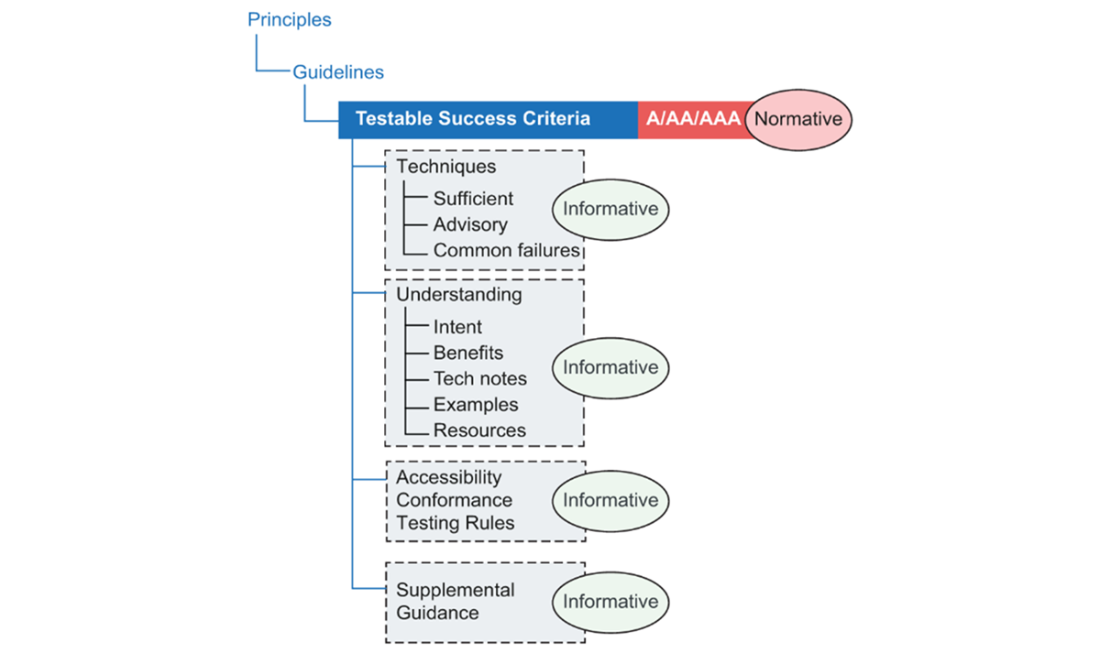
See how supplemental guidance fits among WCAG’s informative supporting materials and formal conformance requirements. section 1.5.1