Synchronization coordinates concurrent execution by establishing ordering and visibility between operations. In C, library synchronization functions form release/acquire pairs: a release makes preceding effects available to a corresponding acquire. The resulting relationships, together with atomic operations, establish the happens-before relation used to reason about different threads. section 19.2 section 19.5
TAKEAWAY: The operation that acquires synchronization determines which earlier effects become visible.
- Thread creation and joining provide ordering around thread entry, termination, and thrd_join; after joining the last thread, its effects are visible to the joining thread. section 19.2
- call_once makes the first successful initialization call a release for later calls using the same object, so initialized state becomes visible to them. section 19.2
- Mutex release and acquisition synchronize critical sections; detached threads lose ordinary join-based synchronization and retain only limited termination-handler relationships. section 19.2
- Sequential consistency is the default model for atomic objects, whereas C library synchronization does not automatically receive that stronger guarantee. section 19.5
One-time error-log initialization
Several threads may reach the same call_once operation concurrently. Exactly one executes errlog_fopen; every caller returning from call_once can use errlog because the initialization effects are visible through synchronization. section 19.2
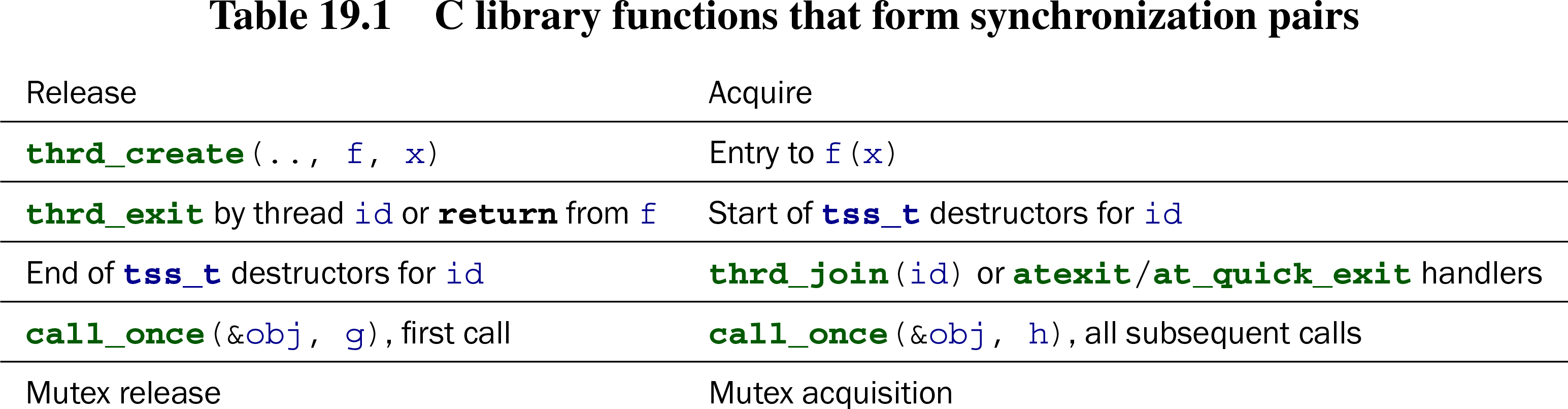
Table 19.1. C library functions that form synchronization pairs (view table figure)
| Release |
Acquire |
|---|---|
| thrd_create(.., f, x) | Entry to f(x) |
| thrd_exit by thread id or return from f | Start of tss_t destructors for id |
| End of tss_t destructors for id | thrd_join(id) or atexit/at_quick_exit handlers |
| call_once(&obj, g), first call | call_once(&obj, h), all subsequent calls |
| Mutex release | Mutex acquisition |
Maps C release operations to their corresponding acquire operations, including thread lifecycle, call_once, and mutex synchronization. section 19.2