A target architecture describes a proposed future state that connects business objectives and capabilities to technology choices. It clarifies where to build, where to buy, and which candidate solutions could support the desired evolution. section 16.1.2
Develop it by progressively connecting strategic intent to architectural choices:
- Map business capabilities to their evolution states: unique, supporting, or generic. section 16.1.2
- Assess how current technology supports each capability and whether that approach remains appropriate. section 16.1.2
- Record build-versus-buy decisions and candidate solutions, then connect the architecture to the target operating model. section 16.1.2
Modernizing content delivery
A cruise business needed capabilities for country-specific language, changing content, and context-sensitive delivery. Its target architecture supported a platform that managed content and reduced duplication, while the resulting operating model defined teams, decision rights, partners, measures, tools, and talent. section 16.1.2
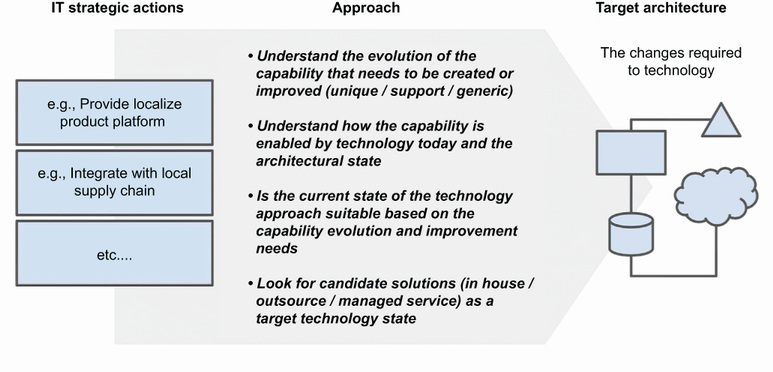
Use the visual approach to trace capability evolution, current technology, and candidate target solutions. section 16.1.2
