A target condition defines the future state an API delivery process should reach after selected countermeasures address identified root causes. It turns improvement ideas into a concrete direction for planning and later effect confirmation. section 2.7 section 2.2
Develop a target condition by:
- Linking proposed countermeasures to the causes identified during root-cause analysis. section 2.7
- Selecting feasible actions with input from colleagues involved in the process. section 2.7
- Recording responsibility, completion dates, expected benefit, expected effort, and implementation status. section 2.7
- Testing the improvement on a small process slice before expanding it across APIs or development teams. section 2.7
API improvement target
For Acme, a target condition can guide improvements to API consistency and design-review time. The initial experiment might cover API changes from one API or design changes from one development team, keeping the application area small while the countermeasures are evaluated. section 2.7 section 2.2
Figure 2.11 Future state value stream map
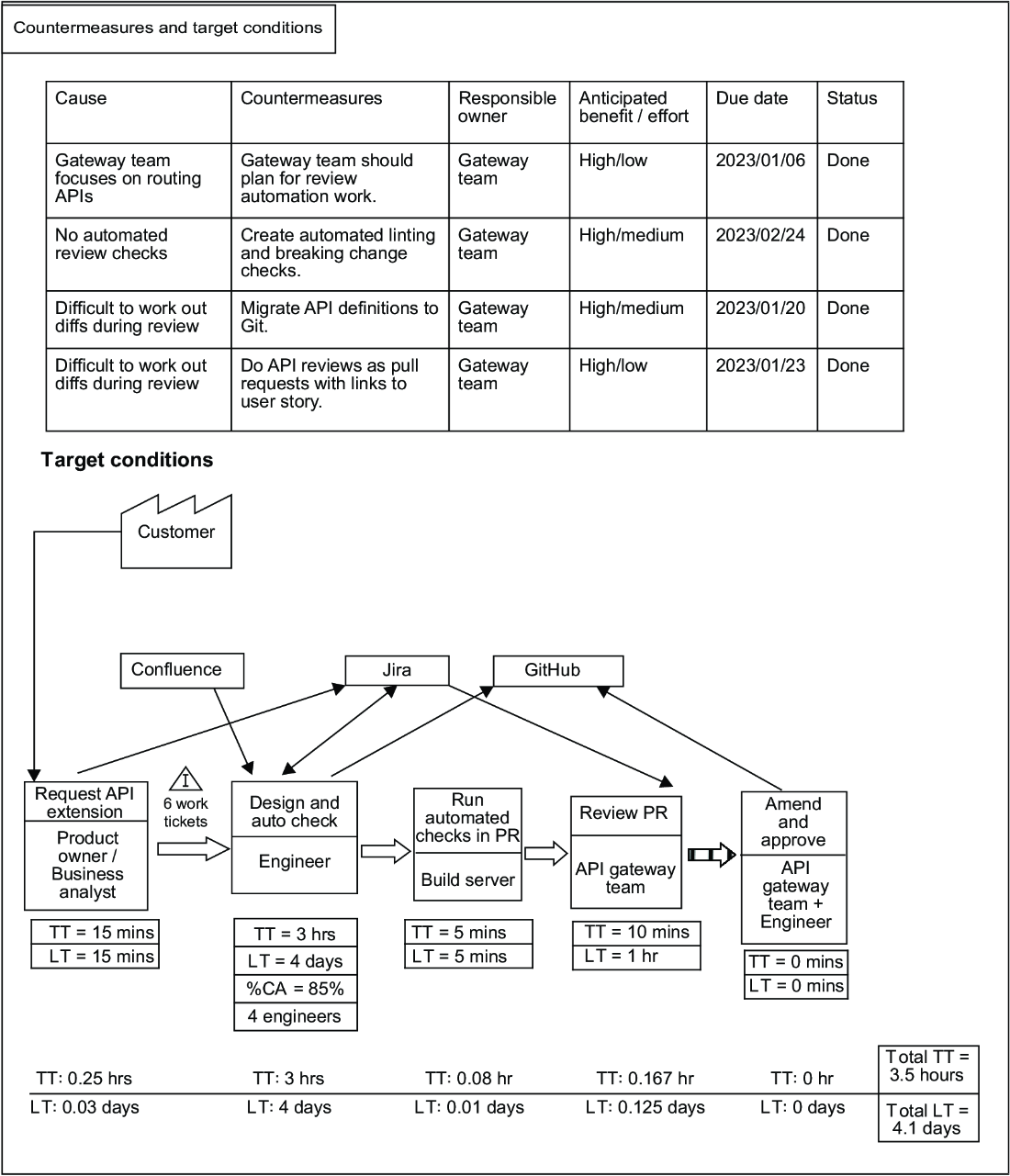
A future-state value stream map provides a visual way to represent the process state the target condition is intended to establish. section 2.7
