Taste drift is the gradual or sudden change in a user's preferences over time. Historical behavior can therefore become a stale guide: a user who favored superhero movies months or years ago may no longer want them today. section 4.1.1 section 4.7
Account for taste drift by:
- Limiting training data to a recent time window so current preferences receive more weight. section 4.7
- Blending a recent-history model with a long-term-history model to balance current interests and durable preferences. section 4.7
- Monitoring declining engagement with recommendations as a possible signal that the system is relying on outdated preferences. section 4.7
- Evaluate user segments separately, because performance for long-term users can hide failures elsewhere in the lifecycle. section 4.7
A stale preference profile
A user who loved superhero movies three years ago may have moved on. A model trained on the full history can keep recommending them, making the experience feel stale; recent-history weighting or model blending can respond to the change. section 4.7
Figure 4.19 The different stages of a user's lifecycle, and which types of recommendations can be used at each stage.
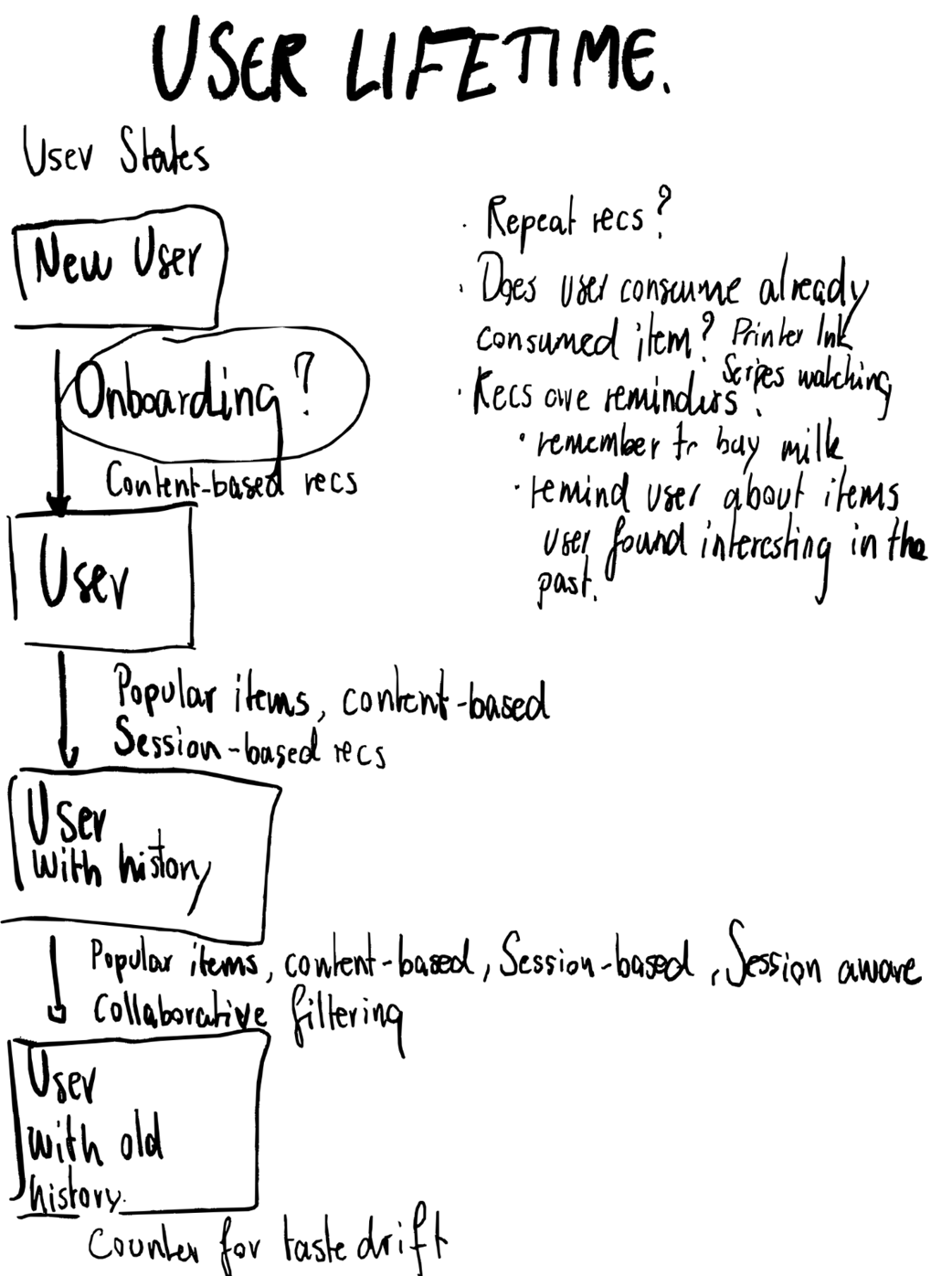
Use the lifecycle figure to place taste drift alongside cold-start, active-user, and long-term-user recommendation strategies. section 4.7