Technology moves from introduction among early adopters to wider use, then phase-out. Phase-out may leave a technology in limited use as a “zombie.” Individual versions follow similar, shorter lifecycles. section 5.3.2
Figure 5.10 Over time, technologies and technology versions come and go
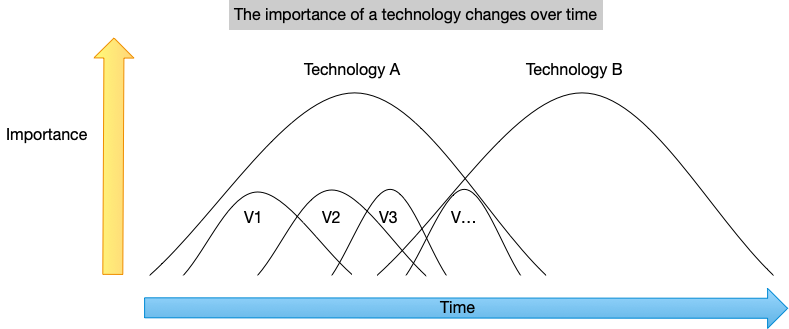
Use the lifecycle diagram to compare the progression of technologies and their versions. section 5.3.2
Align a technology’s importance inside the organization with its importance in the market. Market relevance affects support, patches, learning resources, and the availability of developers; mismatches can create risk. section 5.3.2
Figure 5.11 The importance of a technology to your organization should be aligned with its importance in the market
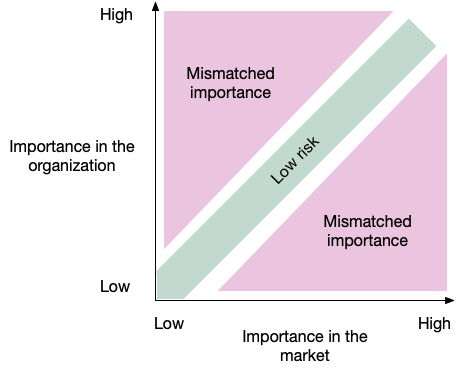
Compare internal reliance on a technology with its importance in the market. section 5.3.2
Continually upgrade the application stack, including libraries, frameworks, language runtimes, infrastructure services, and deployment environments. Consider replacing older technologies periodically, and avoid obsolete or unsupported technologies. section 5.3.2
