A tender is a formal procurement process that invites suppliers to quote a price and approach for specified work. It suits defined projects and third-party services, helping organizations compare providers before engagement. section 4.1.4 section 10.2
Evaluate tenders against the whole engagement, not price alone:
- Seek at least three to five bids and investigate unusually large price differences rather than automatically choosing the cheapest offer. section 4.1.4
- Check whether supplier skills match the requirement immediately, using interviews, exercises, or resumes for the people assigned to the work. section 4.1.4 section 10.2
- Assess technical depth, accessibility, response times, communication, scalability, continuity, client references, and relevant affiliations. section 10.2
- Consider price and contract tenure alongside the provider’s ability to deliver and scale with changing needs. section 10.2
Comparing project bids
An organization with a defined project specification invites several onshore companies to tender. It reviews anonymized resumes, tests relevant expertise, checks references, and removes extreme price outliers before selecting a provider. section 4.1.4 section 10.2
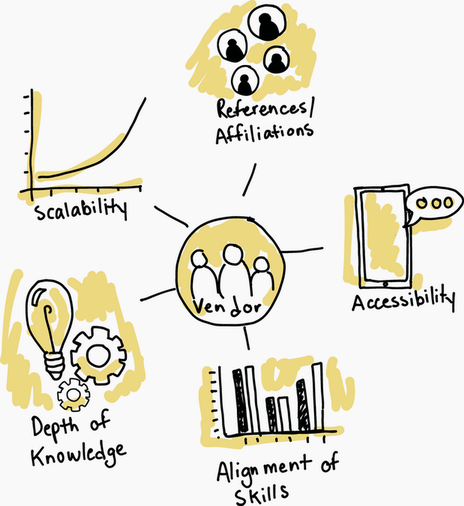
Use the vendor-evaluation overview to compare the criteria that shape a tender decision. section 10.2
