A treatment group receives the new system or intervention being evaluated, while a control group continues using the existing version. Splitting entities this way isolates the change’s effect and limits exposure if the system is broken. section 12.2
Use a treatment group to:
- Vary the affected fraction while protecting most entities from an unproven change. section 12.2
- Compare key metrics with a control group and account for external factors that could otherwise create false conclusions. section 12.2
- Report group sizes, observations, revenue, confidence intervals, and recommended next steps. section 12.4.1
Supermegaretail experiment
A retail experiment reports the number of shops in the treatment and control groups, total checks, and revenue, then compares primary and auxiliary metrics using confidence intervals and a Welch’s t-test. section 12.4.1
Figure 12.6 A/B testing split stage
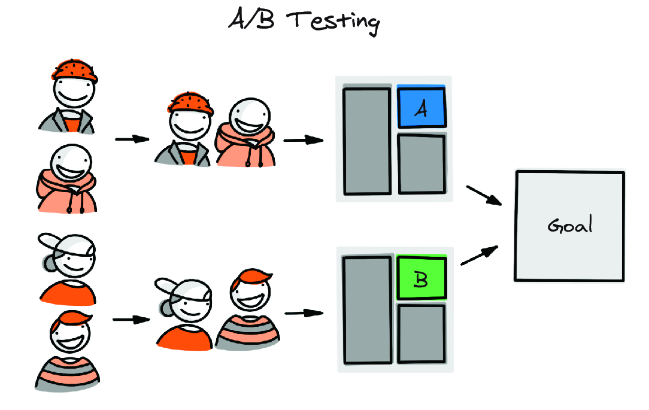
A split-stage diagram helps visualize how entities are assigned to control and treatment groups before measurement begins. section 12.2

