Time-series validation evaluates models when observations depend on time. Random splits can let future data inform predictions about the past, so training data must precede test data. section 7.2.4
When choosing a validation scheme:
- Set the test window to reflect the forecast horizon and how long the model will run before retraining. section 7.2.4
- Choose whether to use all available history or limit training to one or two recent periods. section 7.2.4
- Match training and test sizes to seasonal cycles: yearly patterns call for at least two years of training, while weekly test folds should contain the same weekdays. section 7.2.4
- Consider a gap to account for delays in receiving data and features, and to reduce correlation and leakage risk. section 7.2.4
Figure 7.4 Standard time-based split. The test dataset always follows the train one, so train samples are “past” and test is “future.”
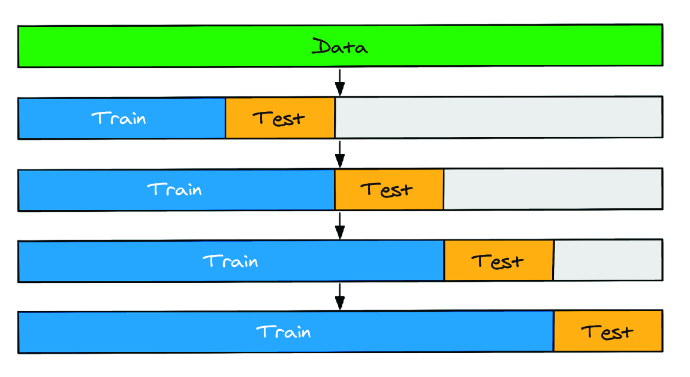
The split places training observations in the past and test observations in the future. section 7.2.4

