TimeWindows defines fixed-size, time-aligned windows for Kafka Streams aggregations. Apply it after groupByKey with windowedBy, then configure the window size and advance interval. section 9.1.1
Build a hopping-window aggregation by:
- Creating a one-minute window with TimeWindows.ofSizeWithNoGrace(Duration.ofMinutes(1)). section 9.1.1
- Chaining advanceBy(Duration.ofSeconds(10)) so results update every ten seconds. section 9.1.1
- Handling the resulting Windowed key by unwrapping its underlying key or producing it with a windowed Serde. section 9.1.1
IoT temperature monitoring
An aggregation can report average and highest sensor temperatures for the previous minute every ten seconds. Because the advance is shorter than the window, successive results overlap. section 9.1.1
Listing 9.3 Adding windowing to the aggregation for the Iot temperature readings
KStream<String,Double> iotHeatSensorStream =
  builder.stream("heat-sensor-input",
    Consumed.with(stringSerde, doubleSerde));
iotHeatSensorStream.groupByKey()                   #1
      .windowedBy(TimeWindows.ofSizeWithNoGrace(
                       Duration.ofMinutes(1))        #2
        .advanceBy(Duration.ofSeconds(10)))
        .aggregate(
 () -> new IotSensorAggregation(tempThreshold),     #3
         aggregator,
         Materialized.with(stringSerde, aggregationSerde))
         .toStream().to("sensor-agg-output",
           Produced.with(serdeString,
                        sensorAggregationSerde))     #4
Inspect the complete Kafka Streams topology for adding TimeWindows to IoT temperature aggregation. section 9.1.1
Figure 9.19 TimeWindows are aligned to the epoch.
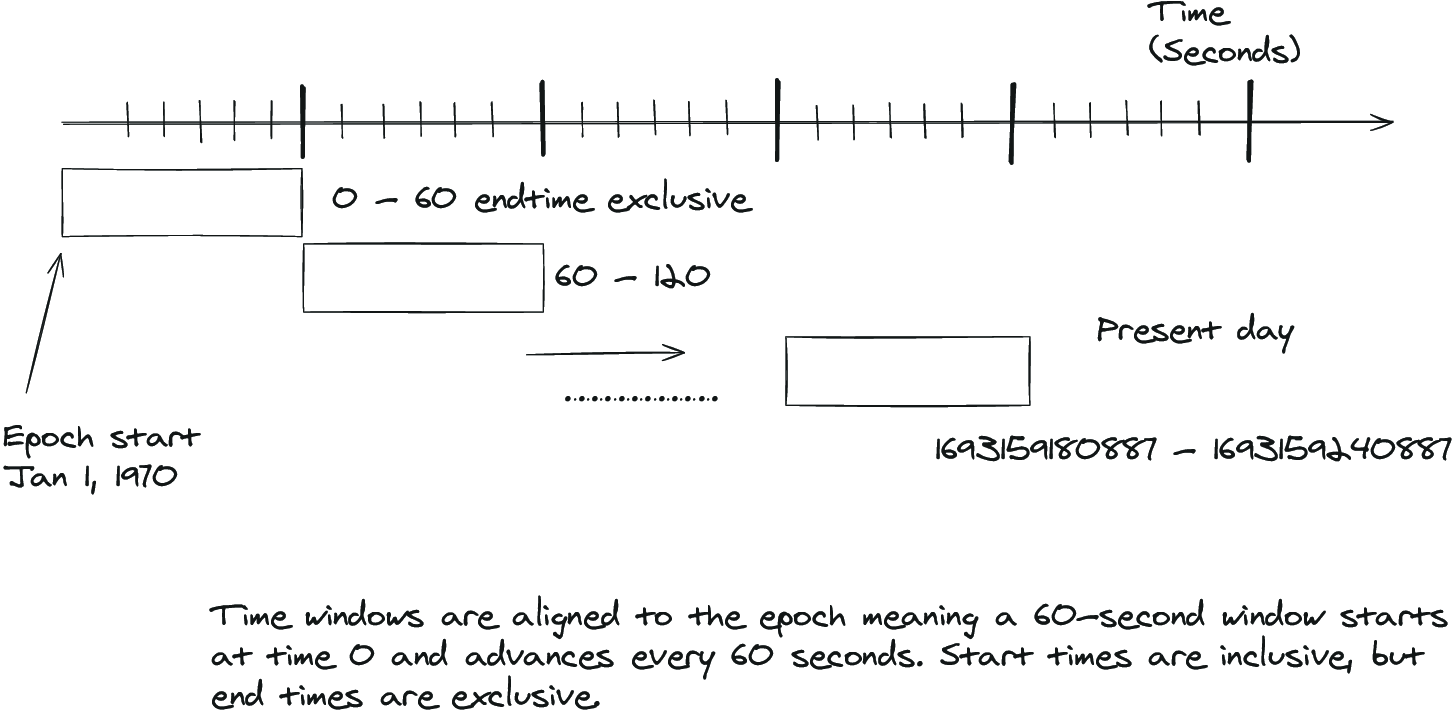
Use the diagram to see how TimeWindows align their boundaries to the Unix epoch. section 9.1.5
