liveBook · Manning

Traditional architecture team

As explained in Microservices Patterns, Second Edition

An architecture team is a team responsible for addressing application-wide architectural concerns and supporting development teams with architectural guidance.

In a distributed application, service-owning teams typically make decisions for their individual services, while application-wide concerns—such as shared infrastructure—need coordination. Smaller applications can handle architecture collectively; larger ones may warrant a separate architecture team. section 3.4.2 section 3.5

This team combines platform and enabling functions: it reduces development teams’ cognitive load with a platform that embodies the architecture and provides architectural consulting. Keep decisions primarily with development teams, and seek advice from affected people and relevant experts. section 3.4.2 section 3.5

Figure 3.18 The four options for who does architecture: benevolent dictator, architect in the team, architecture done by team members, and implicit architecture - image from https://architectelevator.com/architecture/organizing-architecture/
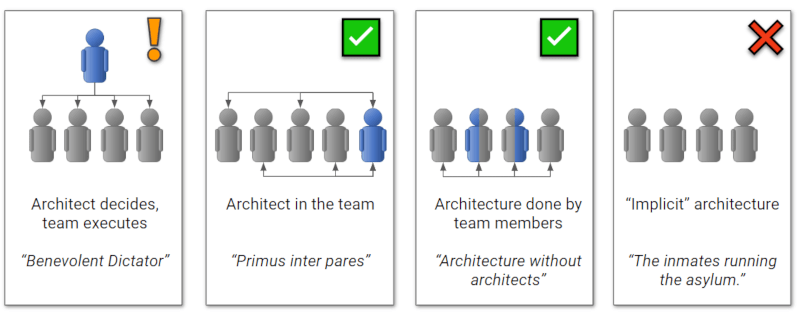
who does architecture from architect elevator

Compare this arrangement with other ways of organizing architecture work. section 3.4.2

How Microservices Patterns, Second Edition covers it

How deep it goes
Explains the team’s purpose and composition without specifying an operating process.
Examples
Uses shared infrastructure in a larger microservice architecture as the motivating case.
What you can do after
Evaluate whether a larger microservice system needs a separate team for cross-service concerns.
How it connects
Connects microservice architecture with platform teams, enabling teams, and development teams.

Related concepts

This explainer was generated by Manning's knowledge graph from the text of Microservices Patterns, Second Edition. The section links point to the parts of the book it draws on.