liveBook · Manning

Training-serving skew

As explained in Machine Learning Platform Engineering

Training-serving skew is a discrepancy between the feature transformations or data seen during model training and those applied during inference.

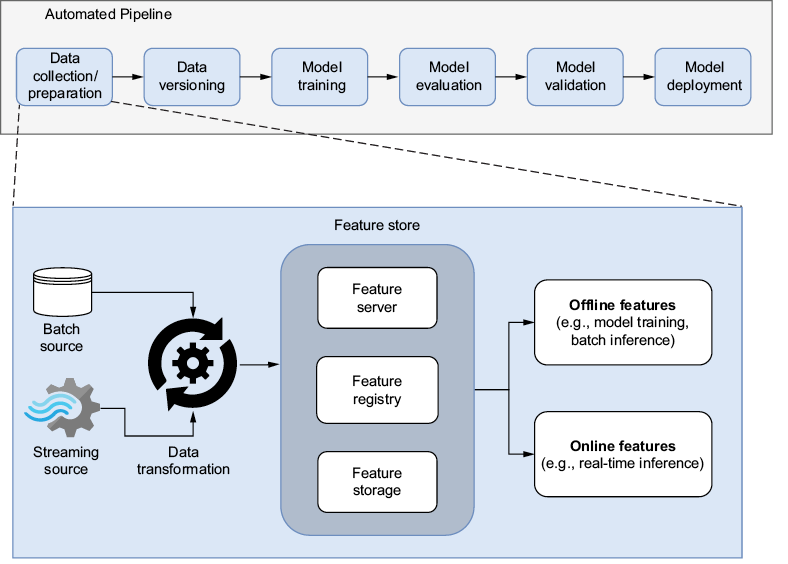
Training-serving skew occurs when feature transformations or other data seen during training differ from those applied during inference. The mismatch is easy to overlook and can undermine production predictions. Feature stores address it by serving consistently transformed features through offline storage for training or batch inference and online storage for real-time inference. section 1.3.3

Figure 1.7 Feature stores take in transformed data (features) as input and have facilities to store, catalog, and serve features.
A diagram of a process flow

AI-generated content may be incorrect.

Use the feature-store architecture to trace how transformed data becomes cataloged, stored, and served across training and inference paths. section 1.3.3


How Machine Learning Platform Engineering covers it

How deep it goes
Defines the discrepancy, identifies differing transformations as a cause, and stops short of detailed detection or remediation procedures.
Examples
Illustrates skew through different transformations during training and inference, including complex joins across multiple data sources.
What you can do after
Apply it via feature stores that serve transformed features through offline and online paths.
How it connects
Connects training-serving skew to feature stores, feature transformations, model training, batch inference, and real-time inference.

Also explained in

Compare how 2 books explain training-serving skew →

Related concepts

This explainer was generated by Manning's knowledge graph from the text of Machine Learning Platform Engineering. The section links point to the parts of the book it draws on.