A transaction log miner reads committed database-log entries, turns relevant changes into messages, and publishes them to a message broker. It can relay messages from an RDBMS outbox table or messages appended to NoSQL records. section 8.3.8
This approach can avoid the querying limitations or performance drawbacks of polling an outbox table or business entities. Its fit depends on the database’s available log or change-stream capabilities. section 8.3.8
Examples of implementations and data sources include:
- Debezium publishes database changes to Apache Kafka. section 8.3.8
- DynamoDB Streams provides a time-ordered sequence of table-item changes that an application can read and publish as events. section 8.3.8
- Eventuate CDC reads outbox changes using MySQL binlog, Postgres WAL, or polling, and publishes them to Apache Kafka. section 8.3.8
Figure 8.18 A service publishes messages inserted into the OUTBOX table by mining the database’s transaction log.
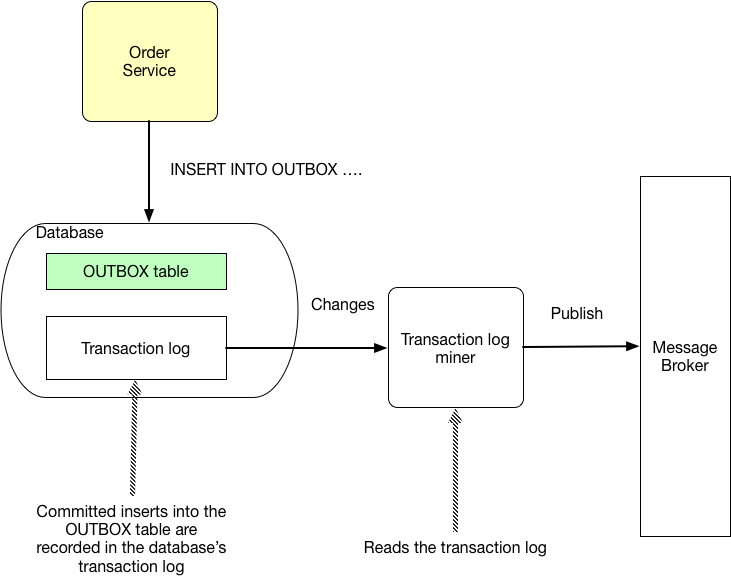
Diagram of a service publishing outbox messages by mining the database transaction log. section 8.3.8
