Transactional leadership sets clear goals and expectations, then connects performance with rewards or consequences. It emphasizes measurable results and defined responsibilities. section 3.2.1
For lead developers, this style can help achieve specific goals and improve performance. However, relying on it alone may not build long-term commitment to the team or company. section 3.2.1 section 3.5
Use transactional leadership to:
- State the goals team members are expected to meet. section 3.2.1
- Make the relationship between performance and rewards or consequences explicit. section 3.2.1
- Compare its focus on specific results with styles such as servant, coaching, or transformational leadership. section 3.2.1 section 3.5
A focused performance agreement
A lead developer defines a specific team goal, explains the expected performance, and states what recognition or consequence follows from meeting or missing it. This can improve short-term performance, but the lead developer may need other leadership styles to strengthen lasting commitment. section 3.2.1
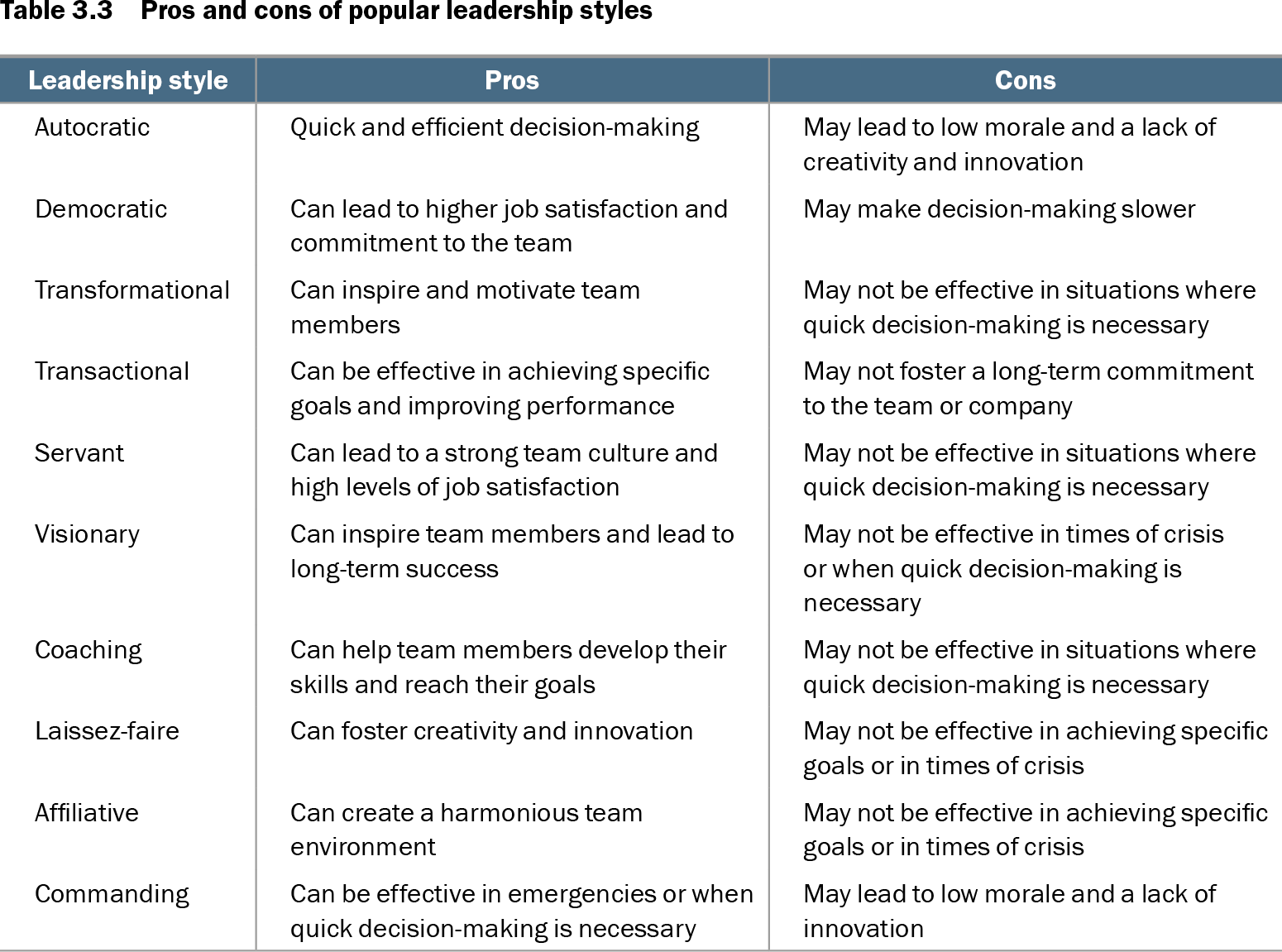
Table 3.3 Pros and cons of popular leadership styles (view table figure)
| Leadership style |
Pros |
Cons |
|---|---|---|
| Autocratic |
Quick and efficient decision-making |
May lead to low morale and a lack of creativity and innovation |
| Democratic |
Can lead to higher job satisfaction and commitment to the team |
May make decision-making slower |
| Transformational |
Can inspire and motivate team members |
May not be effective in situations where quick decision-making is necessary |
| Transactional |
Can be effective in achieving specific goals and improving performance |
May not foster a long-term commitment to the team or company |
| Servant |
Can lead to a strong team culture and high levels of job satisfaction |
May not be effective in situations where quick decision-making is necessary |
| Visionary |
Can inspire team members and lead to long-term success |
May not be effective in times of crisis or when quick decision-making is necessary |
| Coaching |
Can help team members develop their skills and reach their goals |
May not be effective in situations where quick decision-making is necessary |
| Laissez-faire |
Can foster creativity and innovation |
May not be effective in achieving specific goals or in times of crisis |
| Affiliative |
Can create a harmonious team environment |
May not be effective in achieving specific goals or in times of crisis |
| Commanding |
Can be effective in emergencies or when quick decision-making is necessary |
May lead to low morale and a lack of innovation |
Compare transactional leadership with other popular styles through its main benefit—achieving specific goals and improving performance—and its limitation around long-term commitment. section 3.2.1