liveBook · Manning

Transferred bytes

As explained in Data-Driven Cybersecurity

Bytes transferred is a measure of the volume of data transmitted from or to a system during a specified interval.

Transferred bytes measures the volume of data sent from or received by a system during a defined interval. In continuous monitoring, it provides a practical signal for possible data exfiltration when tracked on critical servers or network segments. section 8.3

Spotting possible exfiltration

SecureTech’s dashboard recorded 500GB transferred from critical servers within one hour. That volume highlighted potential data exfiltration risk and gave analysts a measurable signal to investigate alongside other monitoring metrics. section 8.3.1

Figure 8.2 The left side shows SecureTech’s initial continuous monitoring metrics on their example dashboard. On the right are the improved numbers 6 months after analysis and corrections.
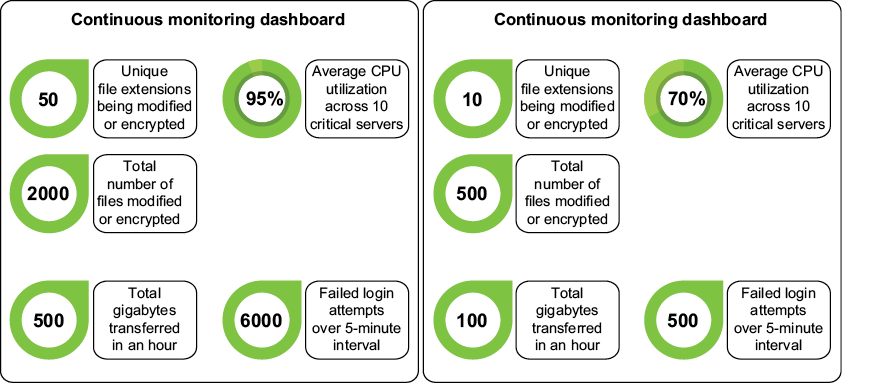
Use the dashboard comparison to place transferred bytes beside related indicators, including file changes, resource utilization, and failed logins, when reviewing monitoring results. section 8.3.1

How Data-Driven Cybersecurity covers it

How deep it goes
Defines the metric and gives a dashboard-based operational example, without specifying thresholds, formulas, or traffic baselines.
Examples
Uses 500GB transferred from critical servers within one hour as a potential-exfiltration dashboard example.
What it assumes
Assumes defined monitoring sources and intervals, while introducing the metric through continuous monitoring and cybersecurity scenarios.
What you can do after
Diagnose potential data exfiltration by examining unusually high transfer volumes in a monitoring dashboard.
How it connects
Connects continuous monitoring with data exfiltration, critical servers, network segments, and data loss prevention.

This explainer was generated by Manning's knowledge graph from the text of Data-Driven Cybersecurity. The section links point to the parts of the book it draws on.