A trust anchor is a pretrusted authority or cryptographic key that vouches for service identities. It may be a certificate authority (CA) signing service certificates or a token issuer signing tokens. Authentication checks whether a service owns the identity it claims; the trust anchor determines which authority makes that identity believable. section 16.1 section 16.4
When no trust anchor is checked
Suppose an attacker impersonates the billing service. If other services accept incoming messages without verifying the sender against a trusted CA or token issuer, the attacker can submit fake invoices, modify amounts, and access billing data. Establishing a trust anchor gives authentication a recognized starting point instead of allowing every service to claim any identity. section 16.1 section 16.4
Figure 16.1 In a system, multiple services communicate to solve various use cases. If the communication isn’t secure, attackers may exploit vulnerabilities and alter or steal data.
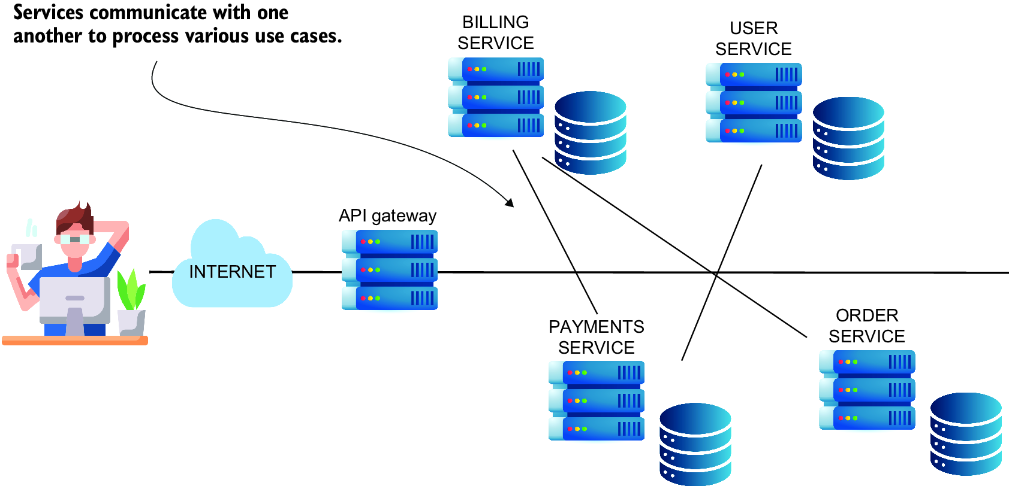
Use the service-communication diagram to see why each service needs verified identity before trusting messages or exchanging sensitive data. section 16.1
