liveBook · Manning

Trust erosion

As explained in Vibe Engineering

Quality and trust erosion is the loss of confidence in an AI system when its outputs are insufficiently correct or useful.

Trust erosion is the loss of confidence in AI outputs when they are not reliably correct or useful. A system can appear efficient while noisy or missed findings make developers disregard it and resume manual work. section 9.1

When cheaper review becomes no review

A team replaced Sonnet with Haiku in its CI code-review agent to reduce cost. Latency and spending fell, but false-positive comments rose from roughly 8% to 18%, while real issues were missed. Developers began ignoring the agent; within a month, senior engineers returned to full manual reviews, effectively negating the investment. section 9.1

Figure 9.1 The Cost Iceberg - visible subscriptions and API spend vs. hidden costs in AI-assisted development.
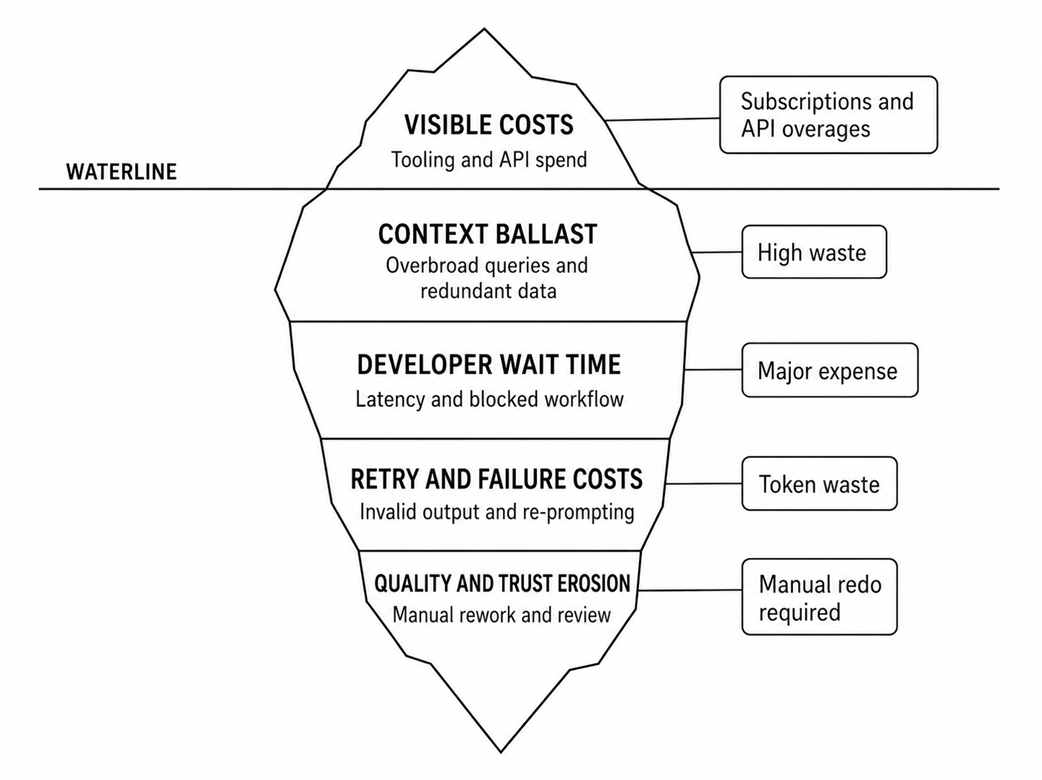
Use the cost-iceberg figure to distinguish visible API and subscription spending from hidden costs such as wasted attempts, noisy reviews, and lost confidence. section 9.1

How Vibe Engineering covers it

How deep it goes
Traces trust loss from false positives and missed issues through developer behavior and recovered manual labor.
Examples
Uses a Haiku-to-Sonnet CI review change, rising false positives, ignored comments, and renewed manual reviews.
What you can do after
Evaluate AI automation by downstream trust and labor effects, not latency and API spending alone.
How it connects
Connects trust erosion with false positives, code review, static analysis, model selection, and manual review.

Related concepts

This explainer was generated by Manning's knowledge graph from the text of Vibe Engineering. The section links point to the parts of the book it draws on.