liveBook · Manning

De-accelerator

As explained in Architecture Modernization: Socio-technical alignment of software, strategy, and structure

A de-accelerator is a technique for slowing a component's evolution toward commodity in order to preserve an advantage.

A de-accelerator deliberately slows a component’s movement toward commodity status to preserve an advantage. On a Wardley Map, it appears as a thick arrow pointing from right to left. section 5.5.2

Common de-accelerators include:

  • Intellectual property rights restrict competitors from using capabilities or designs, protecting an innovative advantage. section 5.5.2
  • Fear, uncertainty, and doubt reduce demand for more evolved components by amplifying risks or creating false narratives. section 5.5.2

Protecting the iPhone advantage

Apple used patents to challenge Samsung over copied iPhone design elements. The dispute illustrates how intellectual property can make competitors work harder to reproduce an advantage. section 5.5.2

Discouraging serverless adoption

Claims about vendor lock-in and cloud providers accessing customer data were used to discourage businesses from adopting serverless technologies. This illustrates FUD as a demand-reducing tactic. section 5.5.2
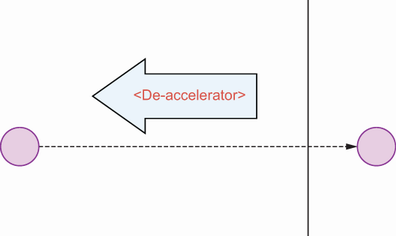
Figure 5.13 Visualizing De-accelerators on a Wardley Map

Use the Wardley Map visualization to locate de-accelerators as forces that resist a component’s movement toward commodity. section 5.5.2

How Architecture Modernization: Socio-technical alignment of software, strategy, and structure covers it

How deep it goes
Explains the concept through map notation and two mechanisms, without prescribing a detailed application procedure.
Examples
Uses Apple’s patent dispute with Samsung and FUD surrounding serverless and cloud adoption as examples.
What you can do after
Evaluate how IP rights or demand-shaping narratives could protect an advantage on a Wardley Map.
How it connects
Connects de-accelerators with Wardley Maps, accelerators, intellectual property rights, FUD, serverless, and vendor lock-in.

Related concepts

This explainer was generated by Manning's knowledge graph from the text of Architecture Modernization: Socio-technical alignment of software, strategy, and structure. The section links point to the parts of the book it draws on.