liveBook · Manning

Tyrosine kinase-linked receptor

As explained in Build AI Drug Discovery Pipelines

A tyrosine kinase-linked receptor is a membrane receptor associated with tyrosine-kinase signaling that responds to extracellular ligands.

A tyrosine kinase-linked receptor is a membrane receptor associated with tyrosine-kinase signaling that responds to extracellular ligands. It belongs to a receptor superfamily used in therapeutic target discovery. section 8.1.1

These receptors present a challenging drug-discovery problem: computational methods can help assess inhibitor specificity across kinases when routine experimental testing is prohibitively expensive. section 8.1.1

Kinase selectivity

A useful evaluation task is determining whether an inhibitor acts selectively on its intended kinase rather than showing off-target promiscuity across the conserved ATP-binding sites of other kinases. section 8.1.1

Figure 8.2 Map of human protein kinases, i.e., the Manning kinome tree, clustered based on sequence similarity into eight major groups [3].
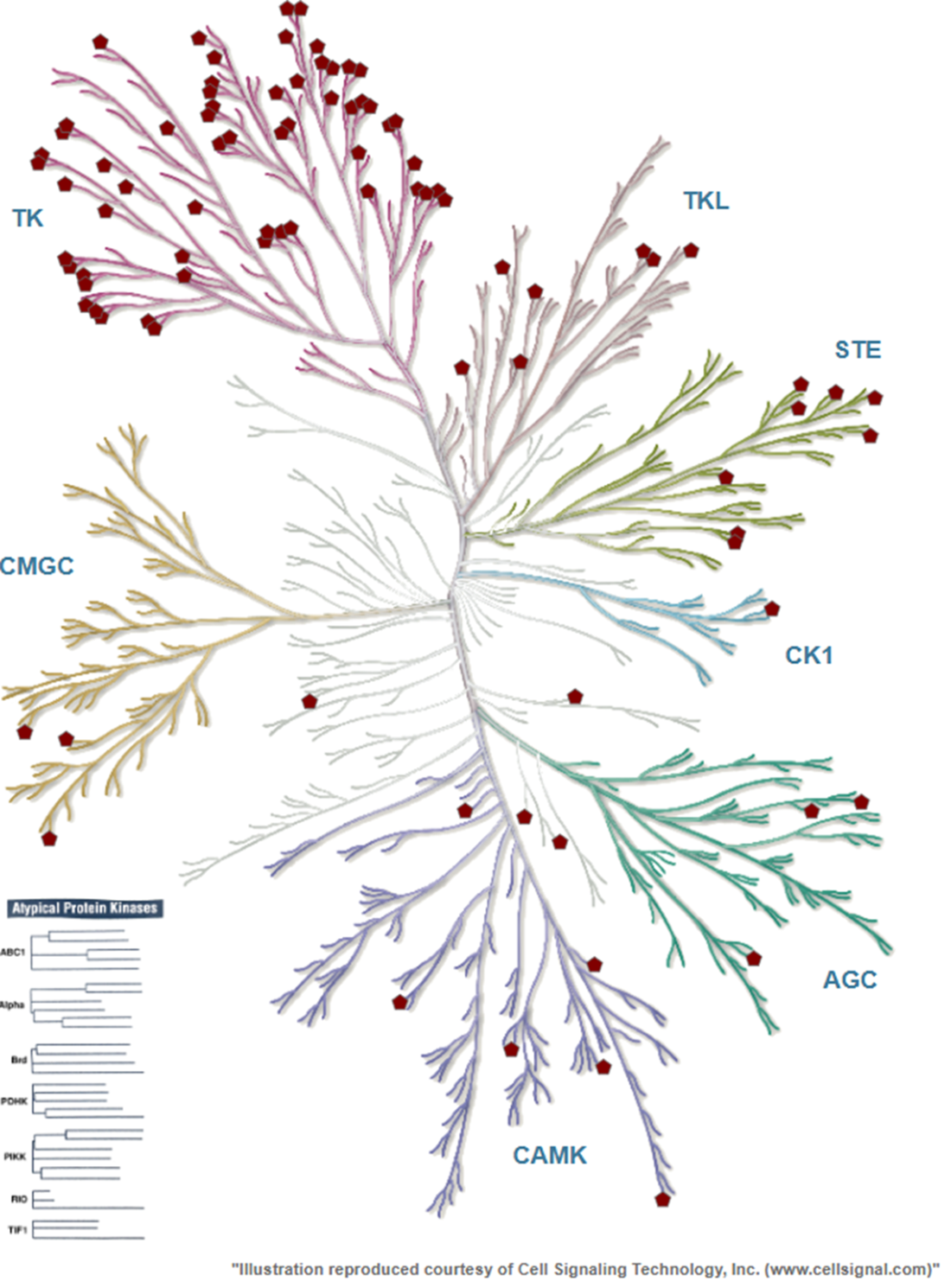
Use the Manning kinome tree to inspect how human protein kinases cluster by sequence similarity into eight major groups. section 8.1.1

How Build AI Drug Discovery Pipelines covers it

How deep it goes
Defines the receptor class and its drug-discovery challenge but stops short of detailing receptor structure or signaling mechanisms.
Examples
Uses inhibitor specificity across kinases and the Manning kinome tree as concrete analytical examples.
What you can do after
Evaluate kinase-inhibitor selectivity computationally when routine specificity testing across the protein family is impractical.
How it connects
Connects tyrosine kinase-linked receptors with protein kinases, kinase inhibitors, receptor superfamilies, and computational methods.

This explainer was generated by Manning's knowledge graph from the text of Build AI Drug Discovery Pipelines. The section links point to the parts of the book it draws on.