An unhappy path describes what happens when invalid inputs, errors, or other failures prevent an actor from achieving the normal goal. It makes the expected consequence explicit instead of merely copying current system behavior, helping teams reconcile expected and actual outcomes. section 14.1.5
Use unhappy paths to make failure behavior visible and verifiable:
- Include negative variations alongside happy path scenarios rather than attempting to enumerate every possible route through the system. section 14.1.4
- Describe the consequence in terms of what the actor should experience when the system rejects input or encounters an error. section 14.1.5
- Use the resulting expectations to identify misunderstood requirements or defects before automating behavior. section 14.1.5
Invalid registration details
A sign-up scenario becomes unhappy when invalid registration details prevent the actor from proceeding to sign-in. Validation rules should activate, the account should remain unregistered, and guidance should explain how to correct the problems. section 14.1.5
Figure 14.9 Visualize both happy and unhappy path scenarios to highlight their different consequences.
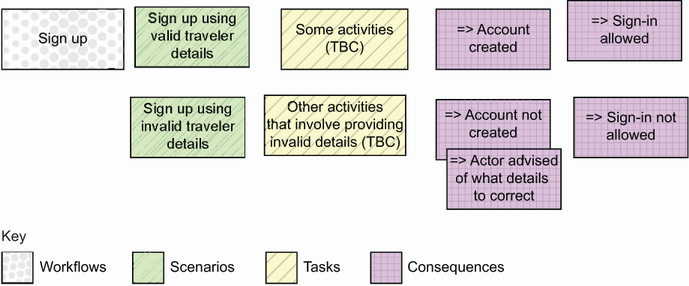
Compare happy and unhappy scenarios visually to distinguish their different consequences. section 14.1.5
