The value and pull principle prevents false starts by keeping work out of implementation until its purpose and readiness are clear. It turns readiness into visible entry criteria rather than relying on assumptions or memory. section 1.2.4 section 1.2.3
Before implementation begins, confirm that:
- The architectural approach is agreed upon. section 1.2.3
- The test environment can validate the change. section 1.2.3
- Acceptance criteria are specific enough for the developer and product manager to reach the same decisions independently. section 1.2.3
Make readiness visible in a pull request
A PR template can require the architectural approach to be documented, the test environment validated, and acceptance criteria reviewed with product before the PR is marked ready for review. section 1.2.3
Figure 1.4 Work loop with Lean interventions, addressing specific failure modes from the notification preferences scenario.
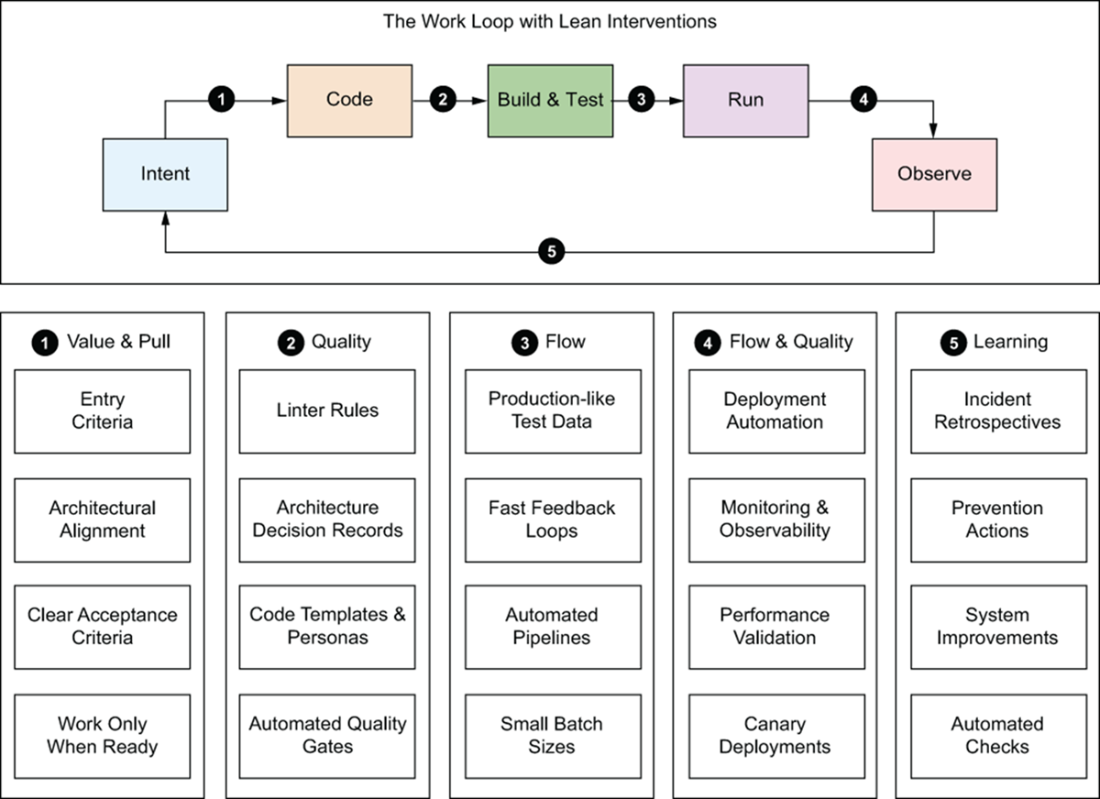
Shows where value and pull intervenes in the work loop: between intent and code. section 1.2.4
