liveBook · Manning

Value focus

As explained in Architecture Modernization: Socio-technical alignment of software, strategy, and structure

Value focus is the extent to which value generated by a capability is concentrated on strategic differentiation or treated as routine operational cost.

Value focus describes where a capability’s value is concentrated: strategic differentiation and future potential, or routine operational cost. It helps identify competitive priorities alongside perception in industry and other evolution characteristics. section 5.3.1 section 5.6

Across the evolution stages, value focus shifts in recognizable ways:

  • Genesis emphasizes high future worth. section 5.3.1
  • Custom-built capabilities seek profit or a return on investment. section 5.3.1
  • Products may offer high profitability. section 5.3.1
  • Commodities carry high volume and reducing margins as the cost of doing business. section 5.3.1

Restaurant menu and optimization

A restaurant menu is usually a table-stakes capability and a cost of doing business, so it warrants only the resources needed to keep it running. Restaurant optimization can instead create competitive advantage by improving restaurant profitability and attracting partners, even when its current investment exceeds its present financial return. Menu research and development may deserve separate treatment because unique recipes can create differentiation. section 5.3.1

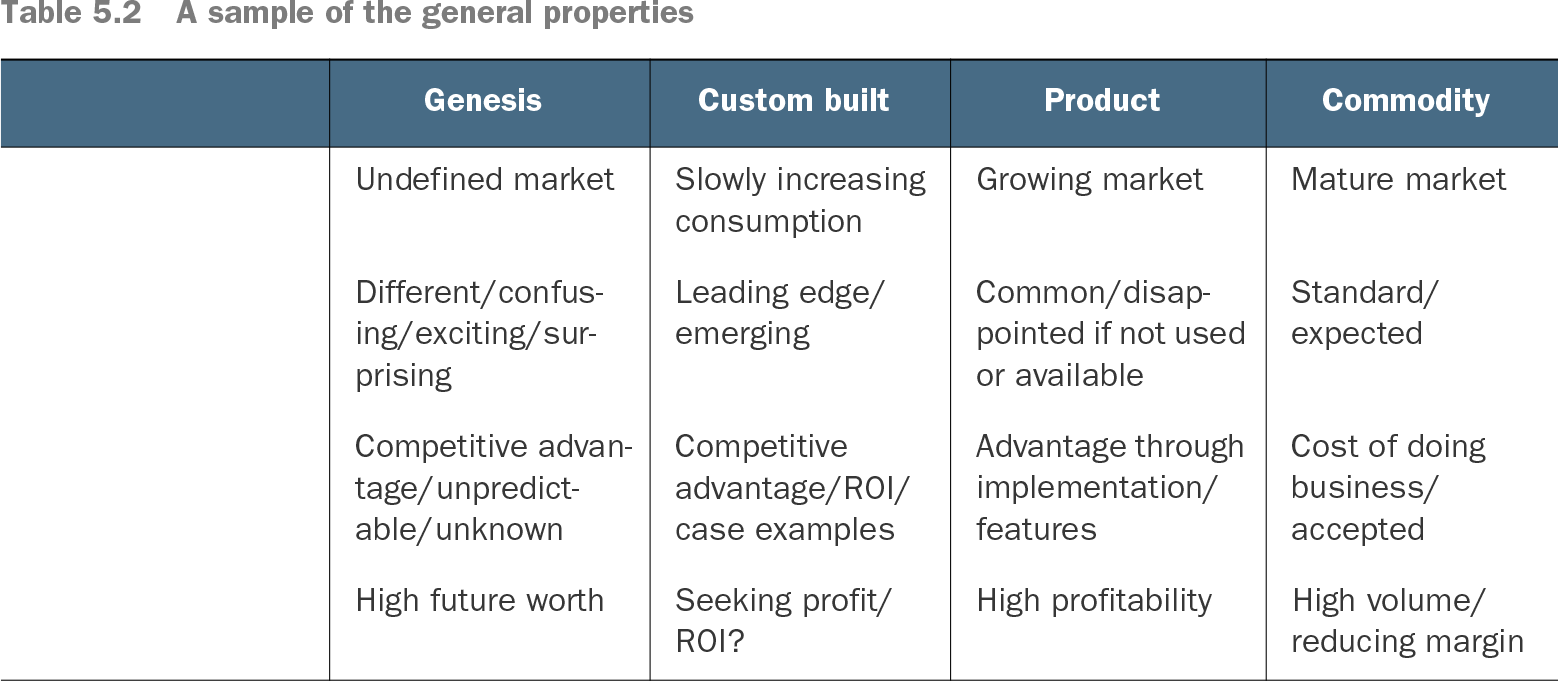
Table 5.2 A sample of the general properties (view table figure)


Genesis

Custom built

Product

Commodity

Market

Undefined market

Slowly increasing consumption

Growing market

Mature market

User perception

Different/
confusing/
exciting/ surprising

Leading edge/
emerging

Common/
disappointed if not used or available

Standard/
expected

Perception in industry

Competitive advantage/
unpredictable/
unknown

Competitive advantage/
ROI/case examples

Advantage through implementation/
features

Cost of doing business/
accepted

Focus of value

High future worth

Seeking profit/
ROI?

High profitability

High volume/
reducing margin

Use the evolution-properties table to compare value focus with market maturity, user perception, and industry perception across genesis, custom-built, product, and commodity stages. section 5.3.1

How Architecture Modernization: Socio-technical alignment of software, strategy, and structure covers it

How deep it goes
Maps value focus across four evolution stages and illustrates it through a restaurant example, without prescribing a quantitative scoring method.
Examples
Uses restaurant menus, restaurant optimization, and menu research and development to contrast commodity operation with potential differentiation.
What it assumes
Assumes familiarity with Wardley Maps and evolution stages while defining value focus through observable business properties and examples.
What you can do after
Evaluate strategic priority and architectural options by locating capabilities according to their competitive value and evolutionary stage.
How it connects
Connects value focus to competitive advantage, comparative advantage, differential advantage, perception in industry, and Wardley Mapping.

This explainer was generated by Manning's knowledge graph from the text of Architecture Modernization: Socio-technical alignment of software, strategy, and structure. The section links point to the parts of the book it draws on.