Variation means that individuals in a population differ in inherited characteristics. Offspring are not perfect copies: they inherit mixtures of genes and may acquire small random changes called mutations. section 4.1
A population is therefore a cloud of variants rather than one uniform category. Variation is produced continually; many variants disappear, while others thrive because they fit their environment better. section 4.1
Peppered moths
Before industrial pollution, light-colored moths were better camouflaged and dark moths made up about 2% of the population. As surfaces darkened, light moths became easier to spot, and the dark variant rose to about 95%. The example shows how existing variation can become more or less common as conditions change. section 4.1
Figure 4.3 A simple example of reproduction and mutation
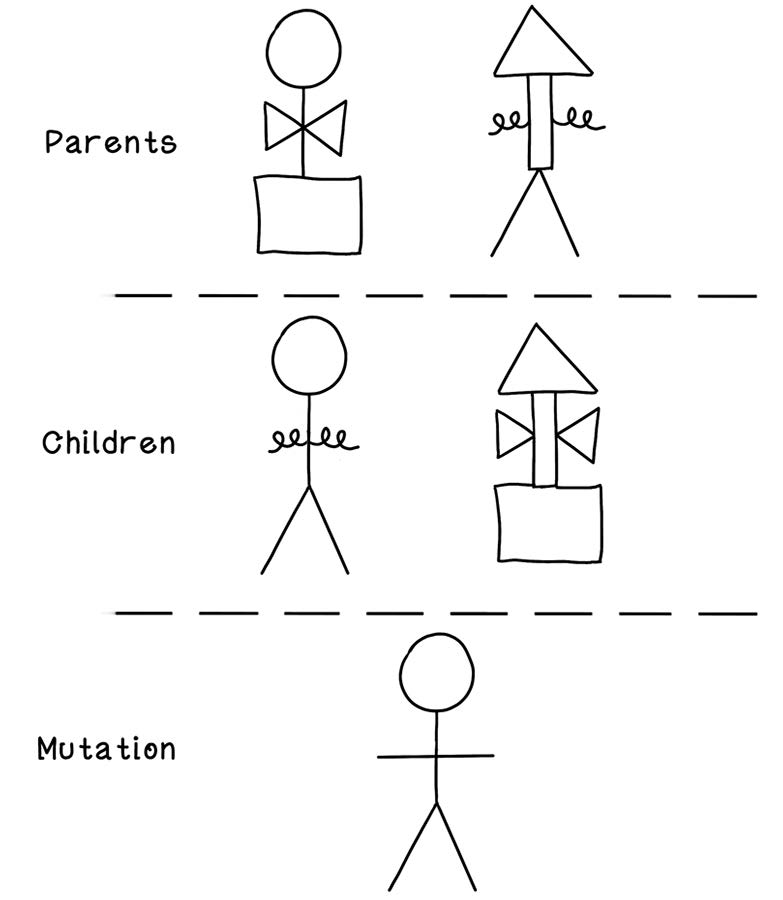
Use the reproduction-and-mutation figure to visualize how inherited differences arise and pass between generations. section 4.1
