liveBook · Manning

Client SDK

As explained in Designing Deep Learning Systems: A guide for software engineers

A software development kit that lets client components communicate with a service programmatically.

A client SDK lets every component and workflow step send metadata to a metadata store programmatically, making instrumentation resemble application logs and metrics. section 8.3.2

Within the reference architecture, the SDK connects:

  • Training workflows and other components to the metadata store server. section 8.3.2
  • The server’s RESTful ingestion and querying interface to backend metadata and artifact storage. section 8.3.2
  • Recorded metadata to web-based search, organization, performance visualization, and model comparison. section 8.3.2
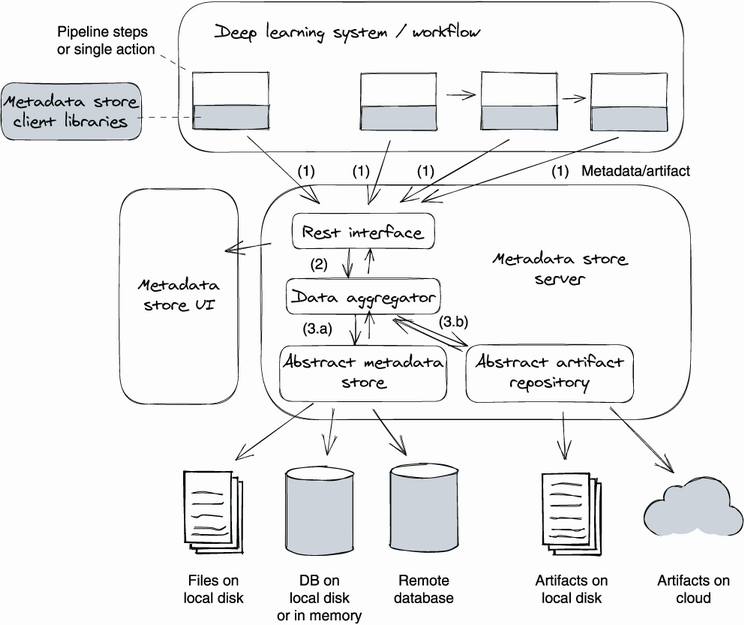
Figure 8.4 A general metadata and artifact store system design

Use the system design to trace how the client SDK fits between workflow components, the RESTful server, storage, and the web UI. section 8.3.2

How Designing Deep Learning Systems: A guide for software engineers covers it

How deep it goes
Defines the SDK’s architectural role and endpoints but stops short of specifying its API methods or implementation.
Examples
Uses deep learning workflow instrumentation, metadata ingestion, metric visualization, and model-run comparison as concrete applications.
What it assumes
Assumes a metadata store architecture with a server, storage layer, and workflow components requiring instrumentation.
What you can do after
Operate metadata instrumentation through an SDK connected to a RESTful metadata store server.
How it connects
Ties client SDKs to metadata stores, RESTful interfaces, web servers, data aggregators, storage backends, and web UIs.

This explainer was generated by Manning's knowledge graph from the text of Designing Deep Learning Systems: A guide for software engineers. The section links point to the parts of the book it draws on.