liveBook · Manning

Experimental model

As explained in Designing Deep Learning Systems: A guide for software engineers

An experimental model is a candidate machine learning model produced during prototyping for comparison or evaluation.

An experimental model is a candidate model produced during interactive prototyping. Teams train several variants, compare their metrics, and use the results to select a model for productionization. section 10.1.1 section 1.1.3

A practical experimental-model workflow includes:

  • Explore available data and choose a training approach suited to the product requirement. section 1.1.3
  • Train candidate models interactively in a notebook while varying code and hyperparameters. section 10.1.1
  • Keep training inputs versioned and connect each result to source-controlled code for traceability. section 10.1.1
  • Evaluate the candidates, select a satisfactory model, and package stable training and inference code for production workflows. section 1.1.3 section 10.4

Visual-recognition prototype

A researcher uses JupyterLab with ImageNet, reuses or stores the dataset through a dataset management service, trains several algorithm variants locally, compares metrics, and publishes the improvement as a library. section 10.1.1
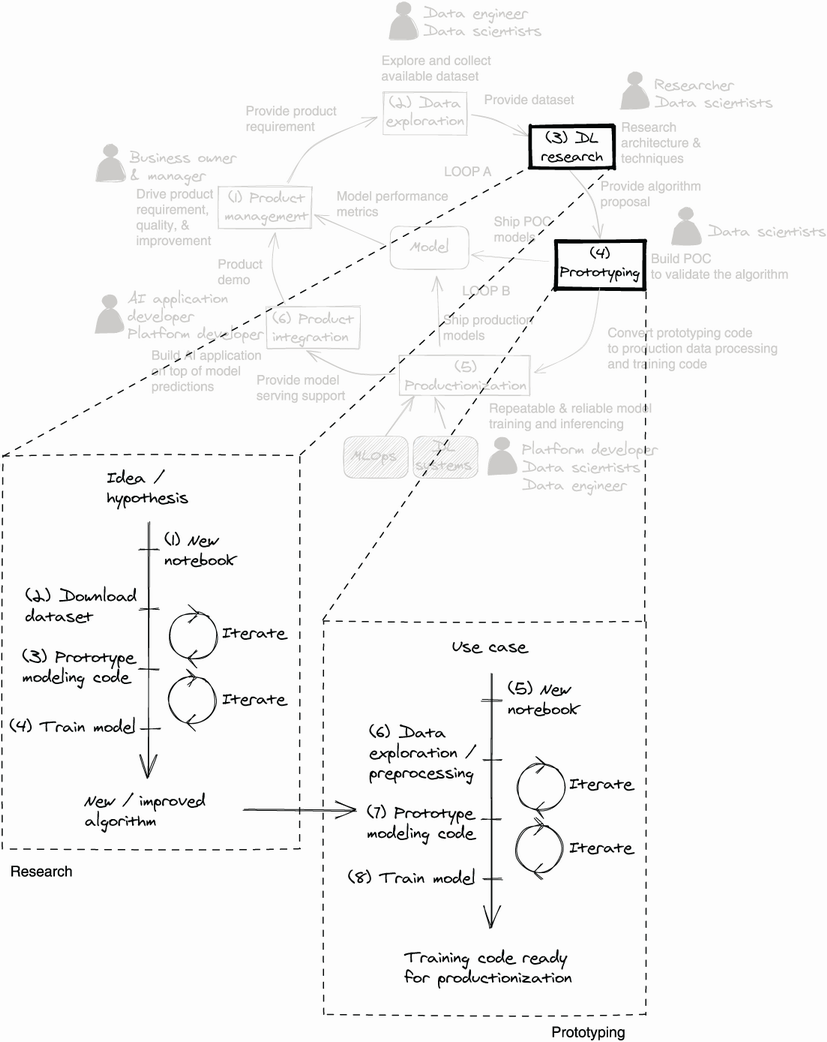
Figure 10.3 Excerpt of the path to production in the research and prototyping phases

Use the production-path diagram to locate experimental-model training between research and productionization. section 10.1

How Designing Deep Learning Systems: A guide for software engineers covers it

How deep it goes
Explains training, comparison, versioning, and selection, but stops short of full deployment operations.
Examples
Uses JupyterLab, ImageNet, versioned datasets, Git, metric comparisons, and natural-language-processing model selection.
What it assumes
Assumes usable training algorithms and data, while emphasizing notebook-based coding, exploration, visualization, and experimentation.
What you can do after
Evaluate candidate models and prepare stable training and inference packages for production workflows.
How it connects
Connects model training with data exploration, hyperparameter optimization, dataset management, model serving, and model deployment.

Related concepts

This explainer was generated by Manning's knowledge graph from the text of Designing Deep Learning Systems: A guide for software engineers. The section links point to the parts of the book it draws on.