liveBook · Manning

Production onboarding

As explained in Designing Deep Learning Systems: A guide for software engineers

Production onboarding is the process of moving prototype code into a production system and adapting it for production execution.

Production onboarding moves promising prototype code from a local or development environment into a production system. The code is converted into a workflow: its logic becomes multiple steps, those steps form a workflow DAG, and an orchestration system runs the workflow according to a schedule. section 9.1.3

The transition creates a gap between experimentation and production execution:

  • Prototype code cannot be shipped directly; it requires additional work to construct a production workflow. section 9.1.3
  • Workflow authoring introduces a learning curve involving DAG syntax, workflow libraries, coding paradigms, and troubleshooting. section 9.1.3
  • After submission, the orchestration system takes responsibility for scheduled workflow execution. section 9.1.3
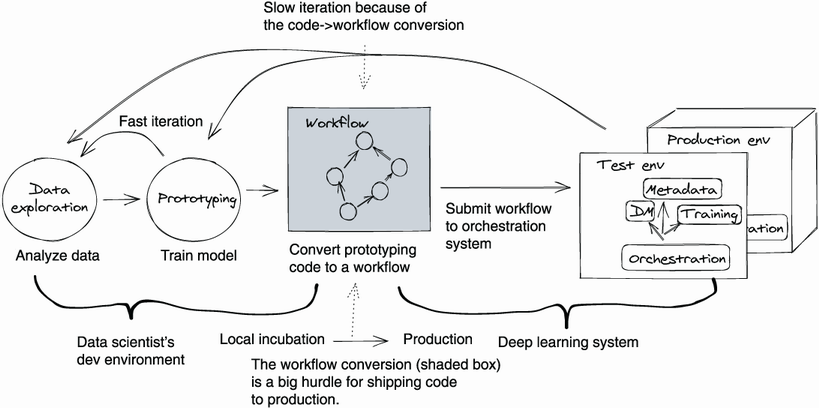
Figure 9.3 A data scientist’s view of deep learning project development

Trace the development path from local data exploration and model-training prototyping through workflow construction and scheduled production execution. section 9.1.3

How Designing Deep Learning Systems: A guide for software engineers covers it

How deep it goes
Traces the conversion into workflow steps and a DAG, while stopping short of detailed implementation guidance.
Examples
Uses local data exploration, model-training prototypes, production workflows, DAGs, and scheduled orchestration as concrete artifacts.
What it assumes
Assumes locally tested algorithm code and introduces the production workflow concepts needed to operationalize it.
What you can do after
Apply prototype code by decomposing it into workflow steps, defining a DAG, and submitting it for scheduled execution.
How it connects
Connects prototype code with workflow orchestration, workflow DAGs, model training workflows, and scheduled execution.

Related concepts

This explainer was generated by Manning's knowledge graph from the text of Designing Deep Learning Systems: A guide for software engineers. The section links point to the parts of the book it draws on.