A webhook is an HTTP callback that sends event notifications to a user-specified URL. It lets an API trigger automated follow-up actions when events occur. section 5.2
Payment notifications
A payment API can let customers configure webhooks for successful payments, new subscriptions, or failed payments. The API then calls the configured URL when the event occurs. section 5.2
Because users control webhook URLs, attackers may configure them to make the server request internal services. Scanning endpoints such as http://localhost:8080/jobs can reveal databases, Jenkins servers, and internal architecture, enabling more targeted attacks. section 5.2
Figure 5.4 Webhooks are among the most common vectors of SSRF attacks. In this example, a threat actor configures a webhook to scan the local network for a service running at http://localhost:8080/jobs.
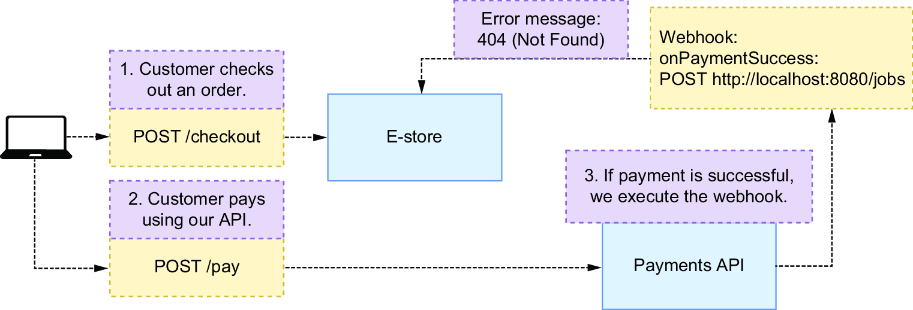
Shows how a malicious webhook configuration can scan a local service and demonstrates why webhooks are a common SSRF vector. section 5.2





