To find a word in a longer line of text, first ask a small question at one possible starting position: do all the letters match? A compare algorithm answers that question with true or false. It receives a text position and a word position, then checks corresponding characters. section 4.2
The procedure stops successfully when it has reached the word’s length: every character has matched. Otherwise, if the current text character equals the current word character, it advances both positions and compares again. A mismatch returns false immediately. section 4.2
Finding “horses”
With W = “horses” and T = “houses and horses and hearses”, search calls compare at each possible position. Compare returns true at position 11, so search prints 11; it returns false at positions whose characters diverge. section 4.2
Figure 4.2 Each comparison in our search
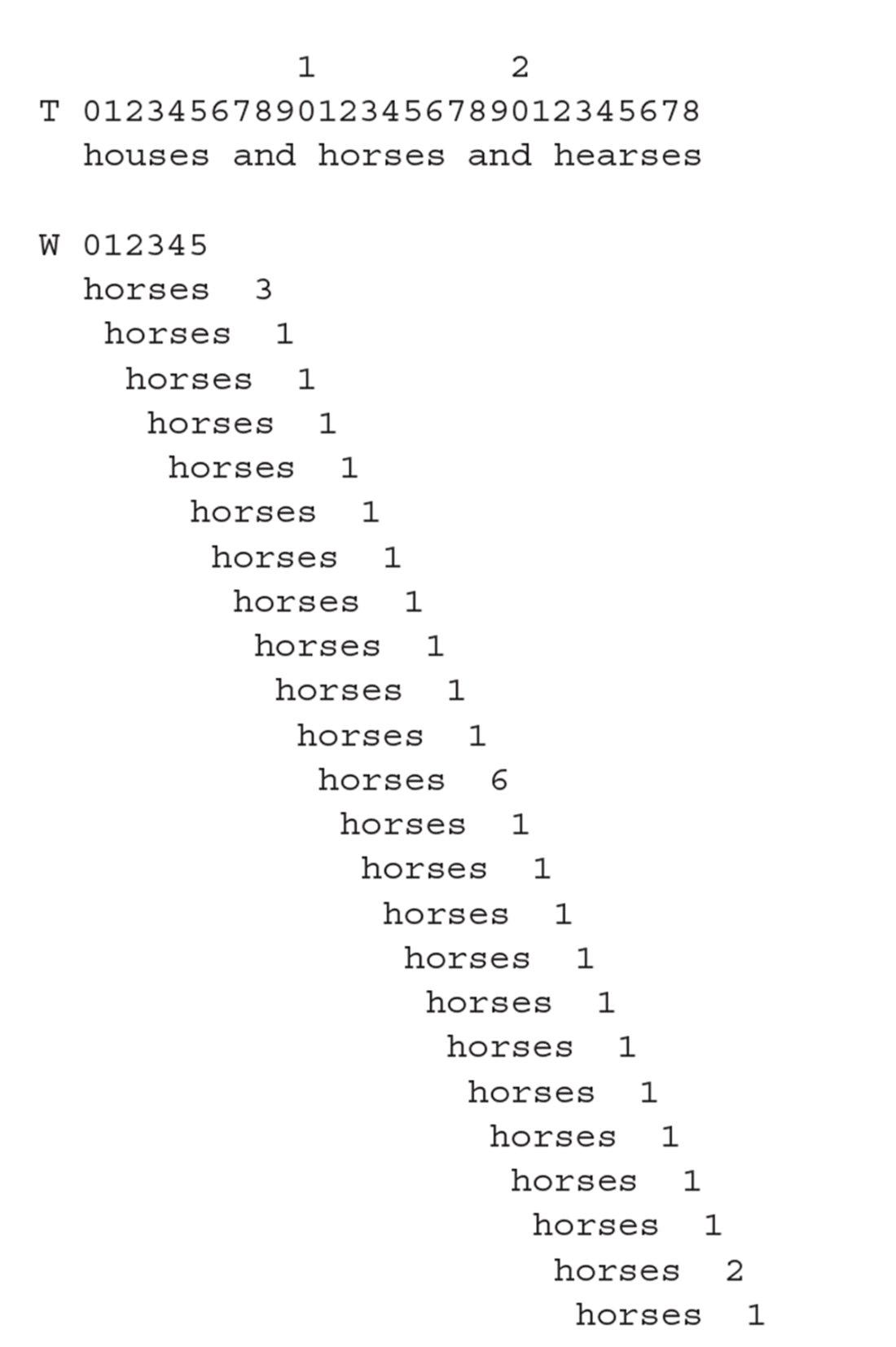
Trace the individual character comparisons made while testing each possible starting position. section 4.2