A woodblock print begins as a stamp. An artist cuts away the wood where no ink should appear, rolls ink onto the raised surface, and presses the block onto cloth or paper by hand or with a simple press. The result is a relief print: the parts left standing make the marks. section 8.2
Fine detail is constrained by physical materials. Close wood grain, ink, paper, and how readily ink spreads all affect the image. Hatching and other patterns meant to suggest gray can be too coarse to blend at viewing distance, or can fill into solid dark areas as ink spreads across the block and paper fibers. section 8.2
Woodblock printing differs from intaglio in where the ink remains:
- Woodblock: remove material where ink should be absent; ink the raised areas. section 8.2
- Intaglio: engrave lines where ink should be present; wipe ink from the plate surface so it remains in recessed lines. section 8.2
Figure 8.7 Woodblock print. Der Formschneider (The Blockcutter), 1568.
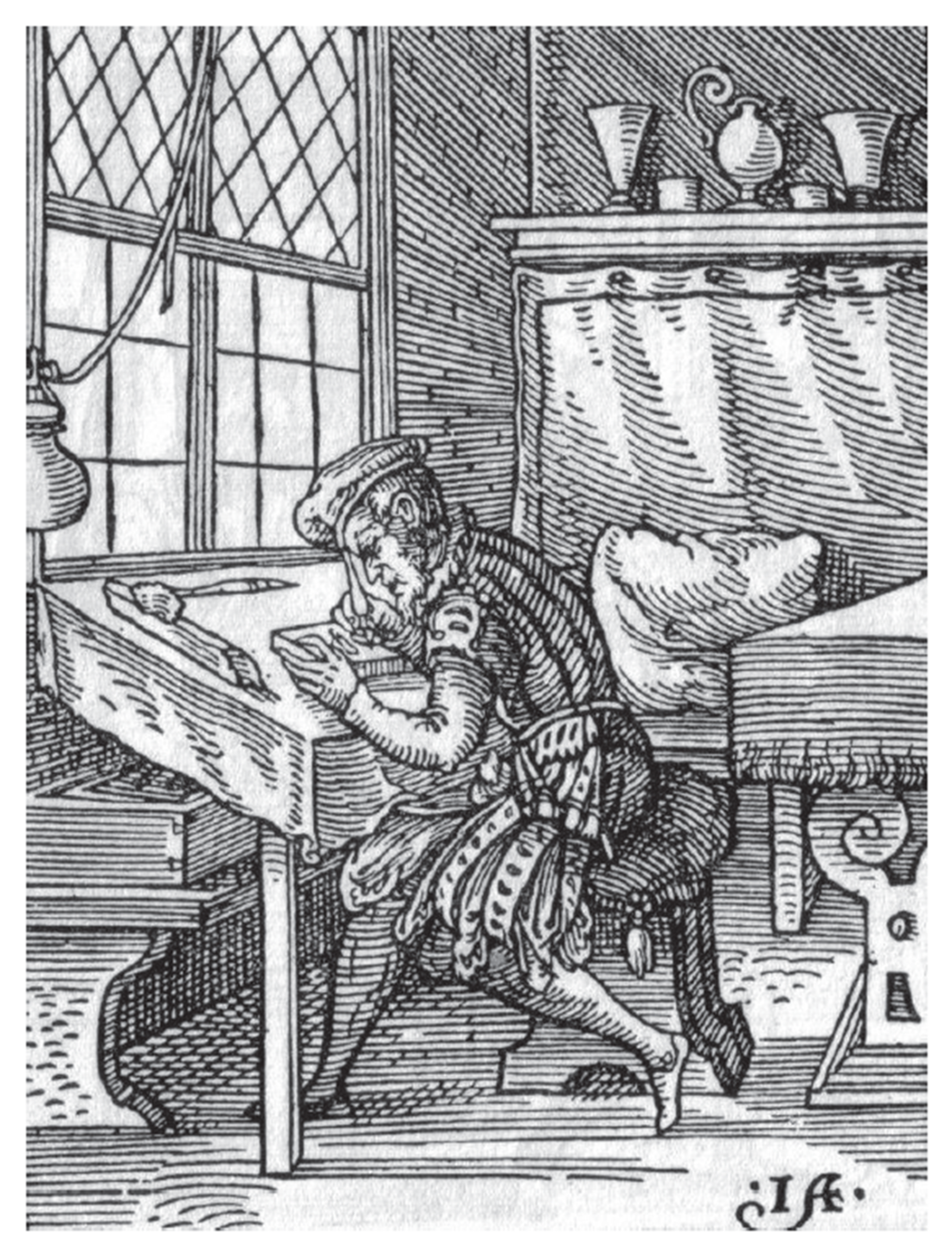
Der Formschneider, published in Germany in 1568, provides a historical woodblock-print example. section 8.2
