liveBook · Manning

Workload abstraction

As explained in Kubernetes for Developers

Workload abstraction is an infrastructure abstraction in which applications are specified as deployable workload requirements rather than individual machines.

Workload abstraction lets you describe what an application needs instead of managing individual machines. Kubernetes places this layer above compute instances, so you specify workload requirements such as CPU, memory, disk, or GPU while the platform provides suitable capacity. section 1.2.2

Workload terms can represent deployment needs such as:

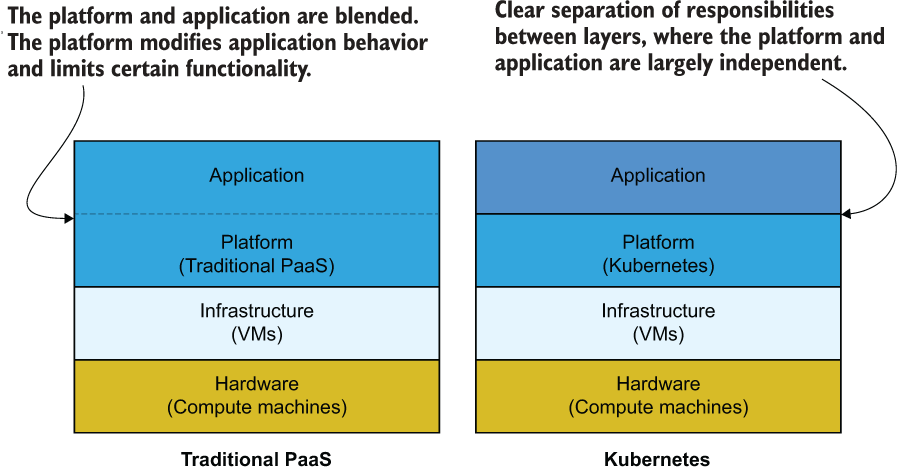
Figure 1.8 Illustration of the separation of concerns between the different compute layers
01-08

Separates hardware-level infrastructure, compute instances, and workload-level deployment concerns. section 1.2.2

How Kubernetes for Developers covers it

How deep it goes
Defines workload-level abstraction and lists deployment constructs, but stops short of implementation details.
Examples
Uses distributed servers, databases with attached volumes, node-wide logging, and movie rendering as workload examples.
What it assumes
Assumes applications and dependencies have properties that enable scaling, while explaining the distinction from machine-level infrastructure.
What you can do after
Operate/configure workloads by declaring CPU, memory, disk, GPU, and other deployment requirements.
How it connects
Connects Kubernetes with infrastructure as a service, compute instances, containers, and resource requirements.

Related concepts

This explainer was generated by Manning's knowledge graph from the text of Kubernetes for Developers. The section links point to the parts of the book it draws on.