A workload identity identifies the service or process making a request on behalf of another principal. In service-to-service authorization, it proves which service is calling, while policy may also require the initiating principal, tenant, sensitivity label, and delegation context. section 11.1.2
Filtering a document before indexing
A Docs service workload identity requests doc:index for a document on behalf of Carol. The request includes tenant and sensitivity context. A Cedar policy denies documents marked Legal, so the service-mesh sidecar blocks the request before it reaches Search. This prevents Search from receiving unauthorized data and limits the risk of Docs acting as a confused deputy. section 11.1.2
Figure 11.2 Service mesh enforcement with sidecars. Cedar evaluates each document sent from Docs to Search. Documents tagged "Legal" are denied; others are allowed.
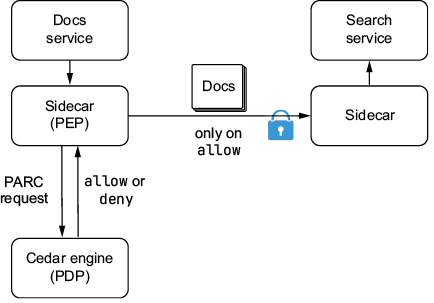
Use the enforcement diagram to trace how sidecars verify service identity and apply Cedar policy at each service hop. section 11.1.2
