X-aaS (“as a service”) is an interaction in which one team consumes another team’s work, such as an API or tool. Teams can work mostly independently, with occasional collaboration when the service or its API needs to evolve. section 1.1.3 section 1.3.1
Use other interaction styles when the work calls for closer contact:
- Collaborate when teams need to discover something together, such as developing a platform feature. section 1.1.3
- Facilitate when one team helps another improve its ways of working through expertise and guidance. section 1.1.3
Figure 1.4 The four types of Team Topologies teams and the three ways that they interact. Stream aligned teams are responsible for turning requirements into code running in production. They are supported by platform, enabling, and complicated subsystem teams. Teams primarily interact via the X-aaS interaction style: consuming the work of another team "as a service". But sometimes they work together to discover new things or help each other improve their ways of working.
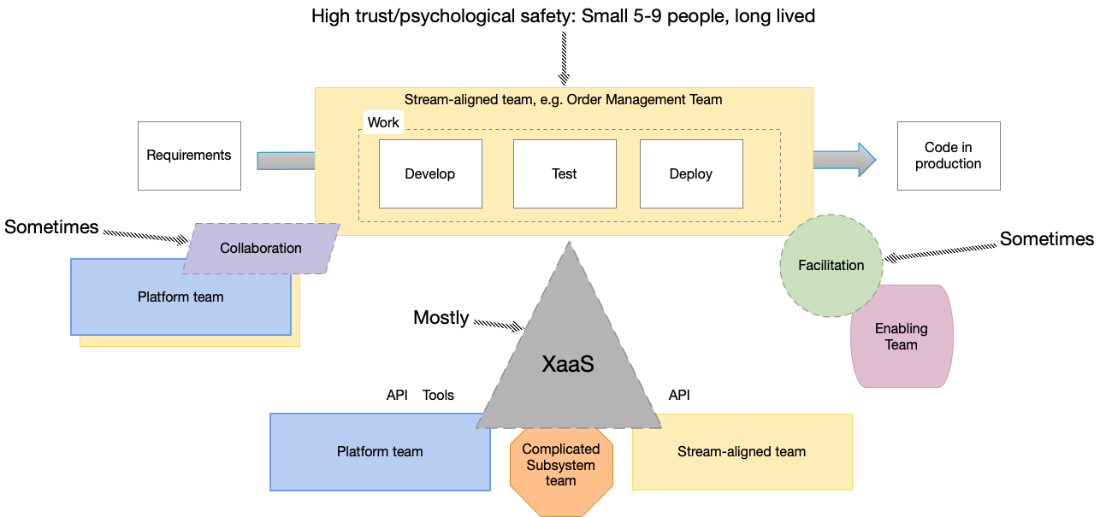
Shows the supporting team types and the three interaction styles, with X-aaS as the primary way teams consume another team’s work. section 1.1.3
