liveBook · Manning

Zener diode

As explained in Hacking Cryptography

A diode designed to operate in reverse breakdown to regulate voltage or exhibit controlled electrical behavior.

A Zener diode is a diode used in reverse-biased circuits, especially power-supply regulation. Although reverse-biased diodes normally block current, Zener effects can produce electrical noise that is sampled for random-number generation. section 2.2.1

Key engineering implications:

  • Treat Zener diodes as poor TRNG sources: they are designed to reduce avalanche noise, making their output unsuitable for reliable noise generation. section 2.2.1
  • Distinguish Zener effects from avalanche effects; both are physical noise phenomena, but they are distinct. section 2.2.1
  • When electrical noise is used for randomness, amplify it and pass it through an analog-to-digital converter. section 2.2.1
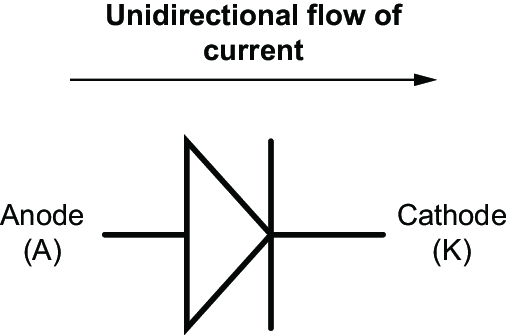
Figure 2.5 Diodes help ensure the flow of current in a single direction.
figure

Use the diode diagram to orient forward bias, reverse bias, and one-direction current flow before assessing Zener behavior. section 2.2.1

How Hacking Cryptography covers it

How deep it goes
Explains forward and reverse bias, parasitic noise, and TRNG limitations, but stops short of circuit-level implementation.
Examples
Uses power-supply regulation and amplified reverse-bias noise sampled through an ADC as concrete applications.
What it assumes
Assumes basic diode behavior and teaches forward bias, reverse bias, and parasitic electrical effects.
What you can do after
Evaluate Zener diodes cautiously as noise sources and distinguish their regulation role from TRNG requirements.
How it connects
Connects Zener diodes with reverse bias, avalanche effects, TRNGs, analog-to-digital converters, and power-supply regulation.

This explainer was generated by Manning's knowledge graph from the text of Hacking Cryptography. The section links point to the parts of the book it draws on.