Annotation in Java
Annotations in Java are a form of metadata that provide additional information about a program. They are not part of the program itself but serve various purposes such as providing information to the compiler, being processed at runtime, or being utilized by development tools. Annotations are a powerful feature in Java, allowing developers to add metadata to their code in a structured way. This metadata can then be accessed and used by the Java compiler, runtime, or other tools to perform various tasks, such as generating code, performing validations, or configuring application behavior.
Overview of Annotations
Annotations serve as a powerful tool for developers to add information to the code, which can be used by the compiler, development tools, or during runtime. They have no direct effect on the operation of the code they annotate, meaning they do not change the program's behavior but can influence how the program is processed or executed by external tools or frameworks.
Common Uses of Annotations
- Documentation: Annotations can be used to generate documentation from the code.
- Code Analysis: Tools can use annotations to perform static code analysis.
- Runtime Processing: Some frameworks use annotations to configure and manage application behavior at runtime.
Annotations in Spring
Annotations in Spring are a powerful tool used to provide metadata for classes, methods, or fields. They play a crucial role in defining configuration, injecting dependencies, and managing the lifecycle of beans within a Spring application. Annotations help in reducing the amount of boilerplate code and make the code more readable and maintainable.
Common Annotations in Spring
- @Entity: Used in Java Persistence API (JPA) to specify that the class is an entity and is mapped to a database table.
- @Table: Used in conjunction with @Entity to specify the details of the table that will be used to persist the entity in the database.
- @Id: Defines the primary key for the entity.
- @Column: Specifies the details of the column to which a field will be mapped.
- @Autowired: A core Spring annotation used for dependency injection, allowing Spring to resolve and inject collaborating beans into your bean.
Intercepting Annotated Methods
Annotations can be used in conjunction with Spring AOP (Aspect-Oriented Programming) to mark methods that should be intercepted by aspects. This is particularly useful for cross-cutting concerns such as logging, security, or transaction management.
To intercept annotated methods, you need to follow a series of steps:
- Create a Custom Annotation: Define a custom annotation that will be used to mark the methods your aspect needs to intercept.
- Configure AspectJ Pointcut Expression: Use a different AspectJ pointcut expression to configure the aspect. This expression is set up to intercept the methods that are annotated with the custom annotation you created.
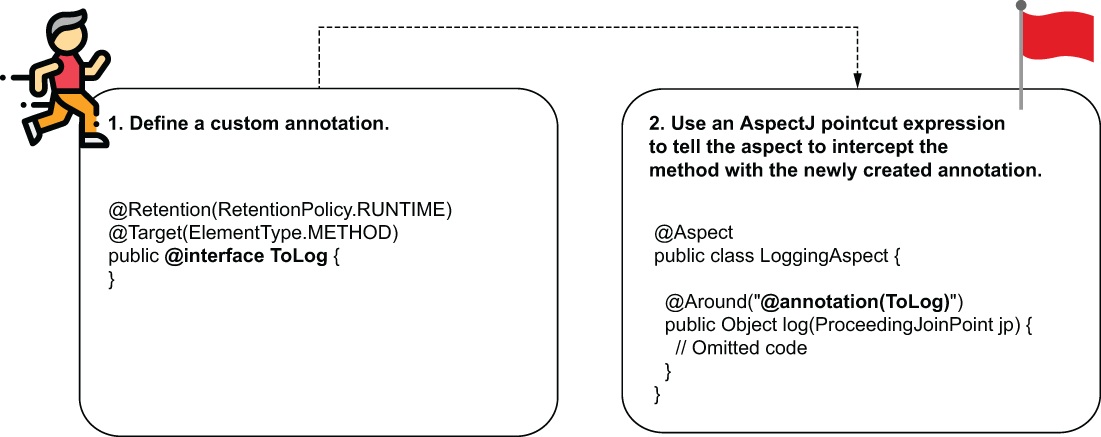 Figure 6.12 The steps for intercepted annotated methods.
Annotations in Java Frameworks
Several popular Java frameworks and libraries make extensive use of annotations to simplify configuration and enhance functionality. Some common examples include:
- JUnit's @Test: Indicates that a method is a test method. When running tests, JUnit will automatically execute methods annotated with @Test.
- Spring's @Controller: Marks a class as a web controller, which can handle HTTP requests.
- Spring's @RequestMapping: Maps HTTP requests to handler methods of MVC and REST controllers, providing a flexible way to handle different types of requests and map them to specific methods in a controller class.
Annotations like these are integral to the functionality of many Java frameworks, enabling developers to write cleaner, more maintainable code by reducing boilerplate and centralizing configuration.
| Book Title | Usage of Annotation | Technical Depth | Connections to Other Concepts | Examples Used | Practical Application |
|------------|---------------------|-----------------|-------------------------------|---------------|-----------------------|
| [Spring Start Here](https://www.manning.com/books/spring-start-here) | Annotations are used for metadata in Spring, enabling declarative programming and configuration. They are crucial for intercepting methods in Spring AOP. [more](https://livebook.manning.com/book/spring-start-here/chapter-2/69) | Discusses advanced uses like method interception with custom annotations and AspectJ pointcut expressions. [more](https://livebook.manning.com/book/spring-start-here/chapter-6/128) | Connects annotations to Spring AOP for cross-cutting concerns like logging and security. [more](https://livebook.manning.com/book/spring-start-here/chapter-6/128) | Provides a step-by-step guide and figures for intercepting annotated methods. [more](https://livebook.manning.com/book/spring-start-here/chapter-6/figure--6-12) | Emphasizes modular and maintainable code through separation of concerns. [more](https://livebook.manning.com/book/spring-start-here/chapter-6/128) |
| [Java Persistence with Spring Data and Hibernate epub](https://www.manning.com/books/java-persistence-with-spring-data-and-hibernate) | Annotations provide metadata for influencing program behavior and simplifying code by reducing boilerplate. [more](https://livebook.manning.com/book/java-persistence-with-spring-data-and-hibernate/chapter-3/141) | Explains how annotations can replace complex configuration files and repetitive code patterns. [more](https://livebook.manning.com/book/java-persistence-with-spring-data-and-hibernate/chapter-3/141) | Highlights the role of annotations in Java Persistence API (JPA) and Spring Data. [more](https://livebook.manning.com/book/java-persistence-with-spring-data-and-hibernate/chapter-3/141) | Discusses annotations in the context of JPA and Spring Data, such as @Entity and @Table. [more](https://livebook.manning.com/book/java-persistence-with-spring-data-and-hibernate/chapter-3/141) | Focuses on enhancing code readability and maintainability. [more](https://livebook.manning.com/book/java-persistence-with-spring-data-and-hibernate/chapter-3/141) |
| [Spring Boot in Practice](https://www.manning.com/books/spring-boot-in-practice) | Annotations are used for metadata, simplifying configuration and enabling features in Spring Boot. [more](https://www.manning.com/books/spring-boot-in-practice) | Covers how annotations reduce boilerplate and enhance readability. [more](https://www.manning.com/books/spring-boot-in-practice) | Discusses annotations in the context of Spring Boot's configuration and feature enablement. [more](https://www.manning.com/books/spring-boot-in-practice) | Mentions the use of annotations for documentation, code analysis, and runtime processing. [more](https://www.manning.com/books/spring-boot-in-practice) | Emphasizes maintainability and readability in Spring Boot applications. [more](https://www.manning.com/books/spring-boot-in-practice) |
| [Spring Microservices in Action](https://www.manning.com/books/spring-microservices-in-action) | Annotations provide metadata for configuration, dependency injection, and bean lifecycle management in Spring. [more](https://livebook.manning.com/book/spring-microservices-in-action/chapter-3/154) | Details common annotations like @Entity, @Table, and @Autowired. [more](https://livebook.manning.com/book/spring-microservices-in-action/chapter-3/154) | Connects annotations to Spring's dependency injection and lifecycle management. [more](https://livebook.manning.com/book/spring-microservices-in-action/chapter-3/154) | Lists common annotations used in Spring applications, such as @Entity and @Autowired. [more](https://livebook.manning.com/book/spring-microservices-in-action/chapter-3/154) | Highlights the reduction of boilerplate code and improved maintainability. [more](https://livebook.manning.com/book/spring-microservices-in-action/chapter-3/154) |
| [The Java Module System](https://www.manning.com/books/the-java-9-module-system) | Annotations provide metadata for reflection, influencing program behavior at runtime. [more](https://livebook.manning.com/book/the-java-9-module-system/appendix-b) | Discusses the use of annotations for reflection and runtime processing. [more](https://livebook.manning.com/book/the-java-9-module-system/appendix-b) | Explores annotations in the context of Java frameworks like JUnit and Spring. [more](https://livebook.manning.com/book/the-java-9-module-system/appendix-b) | Examples include JUnit's @Test and Spring's @Controller and @RequestMapping. [more](https://livebook.manning.com/book/the-java-9-module-system/appendix-b) | Focuses on reducing boilerplate and centralizing configuration. [more](https://livebook.manning.com/book/the-java-9-module-system/appendix-b) |
FAQ (Frequently asked questions)
What are annotations in Java?
How are annotations used in Java?
What is the purpose of annotations in Spring?
What role do annotations play in Java?
How do you intercept annotated methods in Spring?
What is the purpose of annotations in Java?
Can you give examples of annotations in Java?
What are annotations used for in Spring?
Can you give examples of annotations used in Spring?