Loading in Java
In Java, "loading" refers to the process of integrating classes and modules into the Java Virtual Machine (JVM) for execution. This process is crucial for both modular and class-based applications, ensuring that all necessary components are available and correctly configured for runtime. The concept of loading has evolved with the introduction of the Java Platform Module System (JPMS) in Java 9, which brought about significant changes in how resources and services are loaded and managed.
Loading in the Java Module System
The Java Module System, introduced in Java 9, brought a new level of encapsulation and organization to Java applications. Prior to this, resources on the class path were universally accessible, leading to potential conflicts and security issues. With JPMS, resources within a module are encapsulated by default, enhancing security and maintainability by controlling resource visibility.
Resource Loading from Modules
In Java 9 and later, resources are encapsulated within their respective modules. This means that resources are only accessible within the same module unless the module's declaration specifies otherwise. The encapsulation rules apply to resources within packages, but not to those located in the JAR's root or in special folders like META-INF, which remain accessible. To make resources in encapsulated packages available to other modules, the opens clause can be used in the module declaration.
Loading Services with ServiceLoader
The ServiceLoader class is a key component for loading services in the Java Module System. It provides a mechanism to locate and load service providers at runtime. Developers can create an instance using its static load methods, and access service providers through methods such as iterator(), findFirst(), and stream(). This facilitates the dynamic discovery and loading of service implementations, adhering to the modular design principles of JPMS.
Loading in Java
Loading in Java involves several steps to ensure that classes and modules are correctly integrated into the JVM. This process is essential for both modular and class-based applications.
Module Loading
Module loading involves resolving modules from the module path, forming an acyclic graph, and starting execution from the root module. This ensures that all dependencies are correctly identified and loaded, preventing cyclic dependencies that could lead to runtime errors.
Class Loading
Class loading is the process by which the JVM retrieves the contents of a class file as a data stream of bytes, converts it to a usable form, and adds it to the running state. This involves several key steps:
- Finding the Class File: The JVM searches for the class file in specified locations, such as the classpath or module path.
- Parsing the Class File: Once found, the class file is parsed to understand its structure and contents.
- Creating a Candidate Klass: The parsed data is used to create a candidate class object, representing the class in the JVM.
Example of Class Loading
Class<?> clazz = Class.forName("MyClass");
In this example, the Class.forName("MyClass") method is used to load the class MyClass. The JVM finds the class file, resolves it, and constructs a Class object representing the type.
Class Loaders
Class loading in Java is managed by class loaders, which are responsible for loading classes into the JVM at runtime. The process includes:
- Checking if a Class is Already Loaded: To avoid duplication, the class loader checks if a class has already been loaded.
- Delegating to Parent Class Loaders: Class loaders follow a delegation model, delegating the loading request to their parent class loader before attempting to load the class themselves.
- Using Methods like
findClass(): If the class is not found by the parent, the class loader uses methods likefindClass()to locate and load the class.
Class loading can result in exceptions and errors if classes cannot be found or loaded properly, such as ClassNotFoundException and NoClassDefFoundError.
Visual Representation
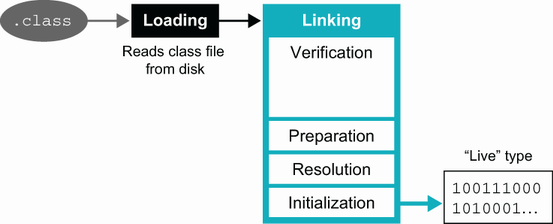 Figure 4.1 Loading and linking (with subphases of linking)
This figure illustrates the process of loading and linking, highlighting the subphases involved in linking. It provides a visual representation of how classes and modules are integrated into the JVM, ensuring a smooth execution flow.
| Book Title | Usage of loading | Technical Depth | Connections to Other Concepts | Examples Used | Practical Application |
|------------|------------------|-----------------|-------------------------------|---------------|-----------------------|
| [The Java Module System](https://www.manning.com/books/the-java-9-module-system) | Discusses loading in the context of the Java Platform Module System (JPMS), focusing on resource encapsulation and security. [more](https://livebook.manning.com/book/the-java-9-module-system/chapter-5/52) | Explores encapsulation rules and the use of `ServiceLoader` for dynamic service loading. [more](https://livebook.manning.com/book/the-java-9-module-system/chapter-10/171) | Connects loading to modular design principles and resource visibility control. [more](https://livebook.manning.com/book/the-java-9-module-system/chapter-5/53) | Provides examples of using the `opens` clause and `ServiceLoader` methods. [more](https://livebook.manning.com/book/the-java-9-module-system/chapter-5/53) | Emphasizes security and maintainability through controlled resource visibility. [more](https://livebook.manning.com/book/the-java-9-module-system/chapter-5/52) |
| [The Well-Grounded Java Developer, Second Edition](https://www.manning.com/books/the-well-grounded-java-developer-second-edition) | Covers loading as a critical process for integrating classes and modules into the JVM. [more](https://livebook.manning.com/book/the-well-grounded-java-developer-second-edition/chapter-4/92) | Details the steps of class loading, including finding, parsing, and creating class objects. [more](https://livebook.manning.com/book/the-well-grounded-java-developer-second-edition/chapter-4/14) | Links loading to class loaders, delegation model, and error handling. [more](https://livebook.manning.com/book/the-well-grounded-java-developer-second-edition/chapter-4/92) | Includes code snippets and visual representations of the loading process. [more](https://livebook.manning.com/book/the-well-grounded-java-developer-second-edition/chapter-4/30) | Focuses on preventing runtime errors and ensuring smooth execution flow. [more](https://livebook.manning.com/book/the-well-grounded-java-developer-second-edition/chapter-4/92) |
FAQ (Frequently asked questions)
What does loading modules involve?
What is the process of loading in the JVM?
What steps are involved in loading a class in the JVM?
What does Figure 4.1 illustrate in the context of loading and linking?
How does the code Class<?> clazz = Class.forName("MyClass"); work?
What is involved in custom class loading in Java?
What can result from improper class loading in Java?
How has resource loading changed from Java 8 to Java 9?
What is the impact of encapsulation on resource loading in Java 9?
Are resources within the same module accessible in Java 9 and later?
How can resources across module boundaries be accessed in Java 9?
Are resources in the JAR's root or META-INF folder encapsulated in Java 9?
How do you load services using the ServiceLoader API?