Select Operation in Java Persistence with Spring Data and Hibernate
The select operation is a fundamental aspect of database interaction, allowing for the retrieval of data from a database. In the context of Java Persistence with Spring Data and Hibernate, understanding the performance implications of select operations across different frameworks is crucial for optimizing application performance.
Performance Comparison
The performance of select operations can vary significantly depending on the framework used. Figure 2.8 provides a visual comparison of select execution times across different frameworks, measured in milliseconds. This figure is essential for understanding how each framework handles select operations and the potential impact on application performance.
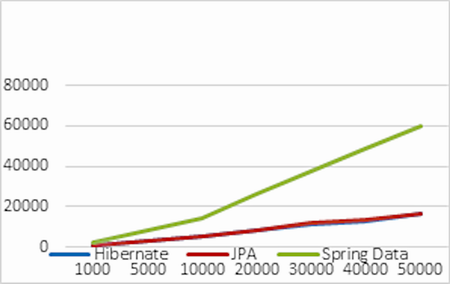 Figure 2.8 Select execution times by framework (times in ms)
Analysis
-
Hibernate and JPA: These frameworks tend to have similar performance characteristics when it comes to select operations. They are generally efficient, with execution times that scale reasonably well as the number of records increases.
-
Spring Data: While Spring Data offers a convenient and powerful way to interact with databases, its execution time for select operations tends to increase more rapidly as the number of records grows. This can be a consideration when dealing with large datasets.
Understanding these performance characteristics is vital for developers who need to make informed decisions about which framework to use based on their specific application requirements and data sizes.
FAQ (Frequently asked questions)
What does Figure 2.8 in the book 'Java Persistence with Spring Data and Hibernate' show?
What is the focus of Figure 2.8 in the context of persisting entities?