Update Operation in Java Persistence with Spring Data and Hibernate
Overview
The update operation is a crucial aspect of data manipulation in databases, allowing for the modification of existing records. In the context of Java Persistence with Spring Data and Hibernate, the update operation can be efficiently executed using various frameworks and tools. This section explores the update operation, providing insights into its execution times across different frameworks and a practical example using Spring Data MongoDB.
Update Execution Times by Framework
Understanding the performance of update operations across different frameworks is essential for optimizing application performance. The following figure illustrates the execution times for update operations measured in milliseconds across various frameworks:
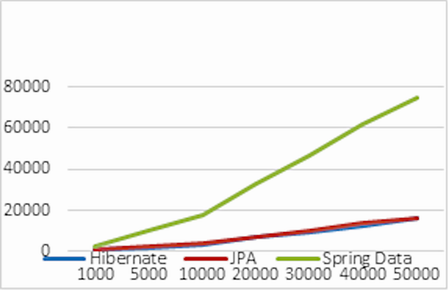 Figure 2.7 Update execution times by framework (times in ms)
This figure provides a comparative analysis, helping developers choose the most efficient framework for their specific use case.
Example: Update Operation with Spring Data MongoDB
The following listing demonstrates how to perform an update operation using Spring Data MongoDB. This example updates the level field of a User document from 1 to 2.
Path: Ch17/springdatamongodb3/src/test/java/com/manning/javapersistence
/springdatamongodb/template/UpdateFirstTest.java

Query query = new Query();
query.addCriteria(Criteria.where("level").is(1));

Update update = new Update();
update.set("level", 2);
mongoTemplate.updateFirst(query, update, User.class);

List<User> users = mongoTemplate.find(query, User.class);
Explanation
-
Query Creation: A
Queryobject is created to specify the criteria for selecting documents to update. In this case, the query targets documents where thelevelfield is equal to 1. -
Update Definition: An
Updateobject is defined to specify the changes to be made. Here, thesetmethod is used to change thelevelfield to 2. -
Executing the Update: The
updateFirstmethod ofmongoTemplateis called to apply the update to the first document that matches the query criteria. TheUser.classparameter specifies the type of documents being updated. -
Retrieving Updated Documents: Finally, the
findmethod is used to retrieve the updated documents, allowing verification of the update operation.
This example illustrates the straightforward approach to updating documents in a MongoDB collection using Spring Data MongoDB, highlighting the ease of use and flexibility provided by the framework.
FAQ (Frequently asked questions)
What does Figure 2.7 in the book 'Java Persistence with Spring Data and Hibernate' show?
How can you execute an update operation using MongoTemplate in Spring Data?
What is the purpose of the 'updateFirst' method in MongoTemplate?
How do you specify the criteria for an update operation in MongoTemplate?
What does the 'set' method do in the Update object in MongoTemplate?