Solder
Overview
Solder is a metal alloy used to create permanent connections between metal components. It is designed to melt at a lower temperature than the components it connects, allowing it to flow around the connections without causing damage. Once it cools and solidifies, it forms a permanent bond, effectively acting as conductive metal glue. Solder is typically available in long, thin lengths wound on a spool, similar to thread or wire.
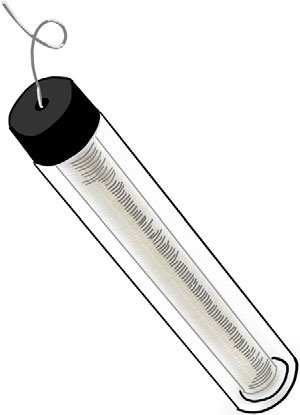 Figure 7.10. Solder comes on a wound spool, like thread.
Soldering Process
To melt solder and create these connections, a soldering iron is required. Soldering irons vary in price and quality, ranging from inexpensive models to high-end, adjustable ones. While cheaper soldering irons may lack some features, they are sufficient for basic tasks if you're not ready to invest in a more advanced model.
The process of soldering involves heating the metal connection pad and the pin with the soldering iron. This heat causes the solder to melt and flow around the joint, as illustrated in the following figures:
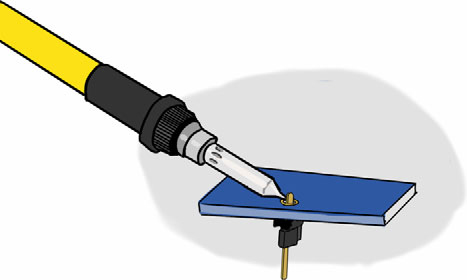 Figure 7.15. Place the soldering iron’s tip on the metal connection pad and the pin to heat them up.
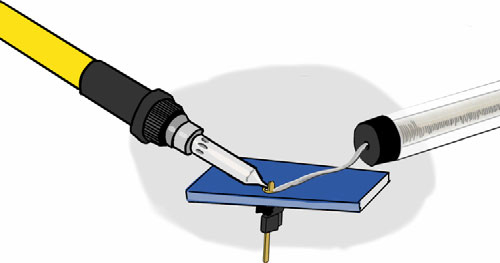 Figure 7.16. The heated pin will cause the solder to melt and flow around the joint.
Once the solder has melted and flowed around the joint, it should form a neat, mountain-shaped mound, resembling a small volcano. This is a sign of a well-soldered connection.
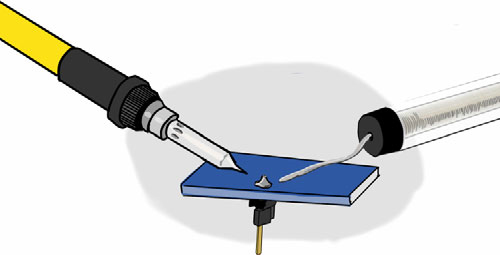 Figure 7.17. A well-soldered connection resembles a little volcano of solder.
FAQ (Frequently asked questions)
What is solder?
What does solder look like?