Biarc
Overview
A biarc is a curve segment composed of two smoothly connected arcs. It is specifically designed to connect two points with specified tangent vectors, ensuring a continuous and smooth transition between the arcs. This property makes biarcs particularly useful for creating smooth paths in animations, such as a bug crawling along a path.
Characteristics of Biarcs
The biarc is a piece of a curve that consists of two arcs. It connects two points, holds the given tangent vectors at these points, and ensures a smooth transition from the first arc to the second. This smooth transition is crucial for applications that require continuous and visually appealing trajectories.
Visual Representation
The concept of a biarc can be visually represented as shown in Figure 5.18. This figure illustrates how two arcs are smoothly joined together to form a biarc segment.
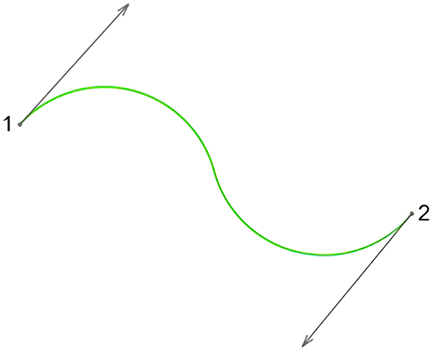 Figure 5.18 A biarc segment is two arcs smoothly joined together.
Practical Considerations
While biarcs provide a smooth and continuous curve, they may not always be ideal in every situation. For instance, when the tangent vectors at the two points point in roughly the same direction, the resulting biarc can appear "bubbly," as shown in Figure 5.20. This bubbly appearance can be undesirable in certain applications, and alternative methods or additional building blocks may be needed to achieve the desired smoothness without such artifacts.
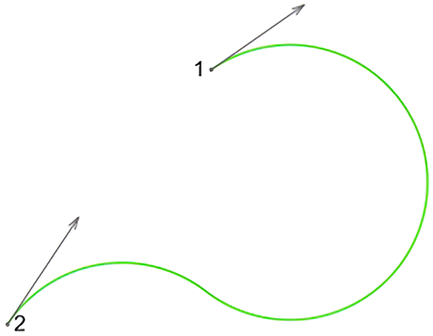 Figure 5.20 Biarc segments don’t necessarily work well in all cases.
Computational Approach
To compute a biarc that goes through a pair of points and follows predetermined tangent vectors, one can use computational tools such as SymPy to derive the necessary formulas. This approach allows for precise control over the biarc's properties and can be implemented in programming environments to generate smooth paths for various applications.
FAQ (Frequently asked questions)
What is a biarc?
How does a biarc connect two points?
What is the use of biarcs in animations?
What does Figure 5.18 illustrate about biarcs?
What does a biarc consist of?
How does a biarc ensure smooth transitions?
In what context are biarcs used for animations?