NURBS (Nonuniform Rational Basis Splines)
Overview
NURBS, or nonuniform rational basis splines, are a sophisticated mathematical model used to generate and represent curves and surfaces. They are particularly valued in computer-aided design (CAD) and computer-aided engineering (CAE) for their flexibility and precision in modeling complex shapes. NURBS utilize arrays of control points, weights, and knot vectors to define curves and surfaces, allowing for detailed and accurate representations of geometric forms, including conic sections and quadric surfaces.
Key Components
-
Control Points: These are the primary elements that define the shape of the curve or surface. By adjusting the position of these points, the shape can be manipulated with precision.
-
Weights: Each control point is assigned a weight, which influences the pull of the curve towards the control point. Higher weights result in a stronger influence, allowing for more refined shaping.
-
Knot Vectors: These are sequences that determine how the control points affect the NURBS curve or surface. They play a crucial role in defining the parameter space over which the curve or surface is defined.
Example: Building a Circle with NURBS
An illustrative example of NURBS in action is the construction of a circle using de Boor’s algorithm. This example highlights the use of control points, weights, and knot vectors to create a precise mathematical representation of a circle. Unlike polynomial modeling, which can only approximate a circle, NURBS can define a true circle, showcasing their power and precision in CAD applications.
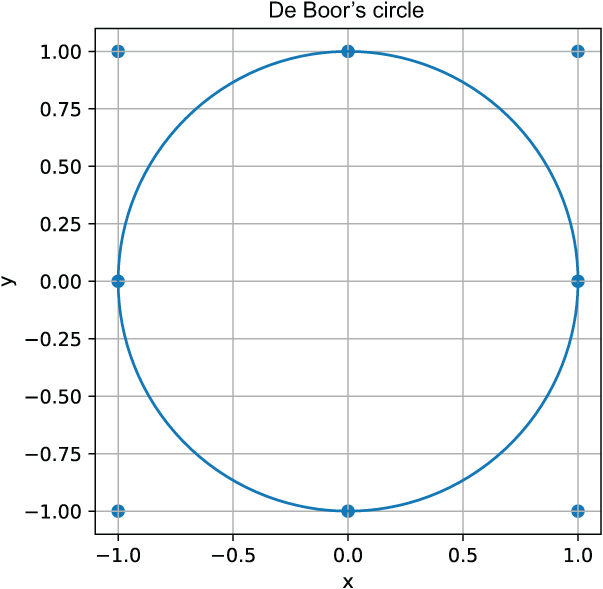 Figure 7.24 This isn’t a model like the one we got with polynomial modeling of the sine; it’s a real circle.
This figure exemplifies the capability of NURBS to accurately model a circle, a task that is challenging for other mathematical modeling techniques. The use of NURBS ensures that the circle is not merely an approximation but a precise geometric entity.
FAQ (Frequently asked questions)
What are NURBS?
How do NURBS offer flexibility in shaping curves?
Why are NURBS widely used in CAD and CAE applications?
What does BS stand for in the context of NURBS?
What is depicted in Figure 7.24?
How can a circle be built using NURBS?
What does the example of building a circle with NURBS demonstrate?