Root
Overview
A root of a polynomial is a value of ( x ) for which the polynomial equals zero. The number of roots a polynomial can have is determined by its degree, with the maximum number of roots being equal to the degree of the polynomial. For example, a quadratic polynomial, which is of degree 2, can have up to two roots.
Examples and Visualizations
Quadratic Polynomials
A quadratic polynomial can intersect the x-axis in several ways, as illustrated in Figure 6.2. It may intersect the x-axis twice, touch it once, or not intersect it at all. The roots of the polynomial are the x-values where these intersections occur.
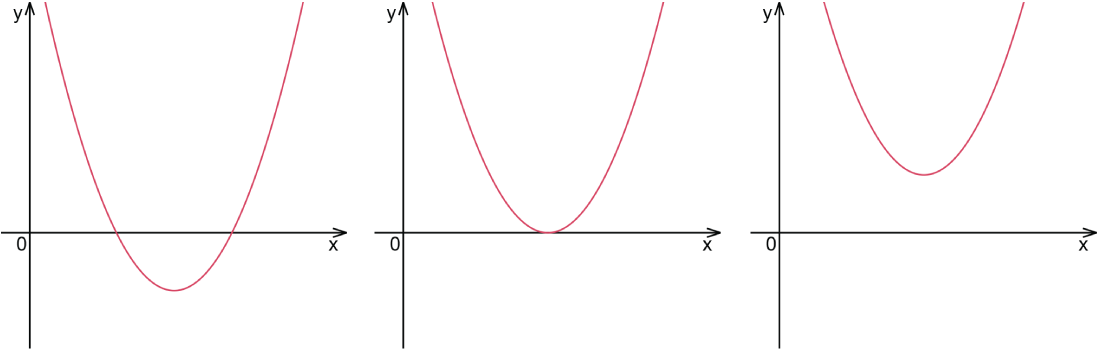 Figure 6.2 A quadratic polynomial may intersect the x-axis twice, touch it once, or ignore it.
Cubic Polynomials
Cubic polynomials, which are of degree 3, can have one, two, or three roots. This is depicted in Figure 6.3. The graph of a cubic polynomial must intersect the x-axis at least once, as it cannot completely avoid the axis.
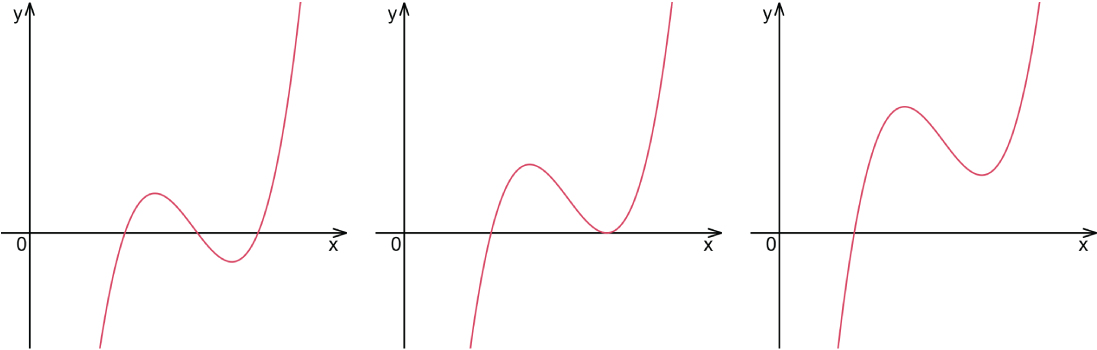 Figure 6.3 A cubic polynomial may have one, two, or three roots.
Higher-Degree Polynomials
For polynomials of higher degrees, such as degree 4, the number of roots can be up to the degree of the polynomial. Figure 6.4 shows a polynomial equation of degree 4, which can have up to four roots. The pattern is that the number of roots is less than or equal to the degree of the polynomial.
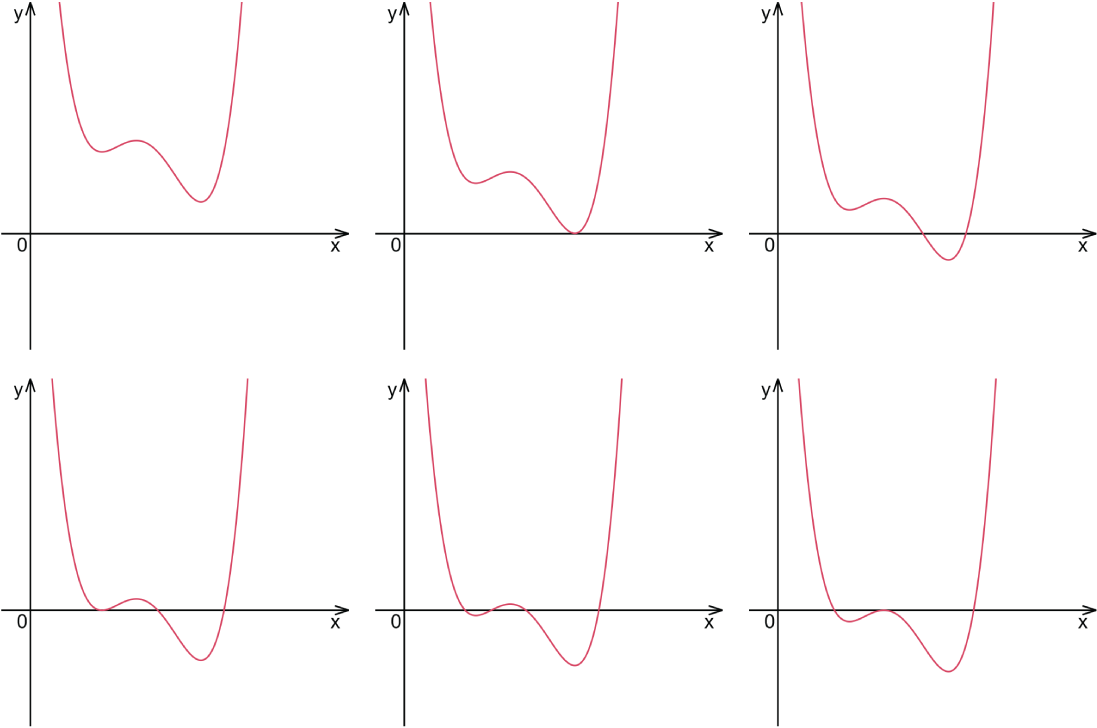 Figure 6.4 A polynomial equation of degree 4 has up to four roots.
Derivatives and Roots
The derivative of a polynomial provides insights into the behavior of the original polynomial. For instance, the derivative of a cubic polynomial is a quadratic polynomial. Figure 6.5 illustrates a cubic polynomial with its derivative. The roots of the derivative indicate where the original polynomial has local extrema, such as bumps.
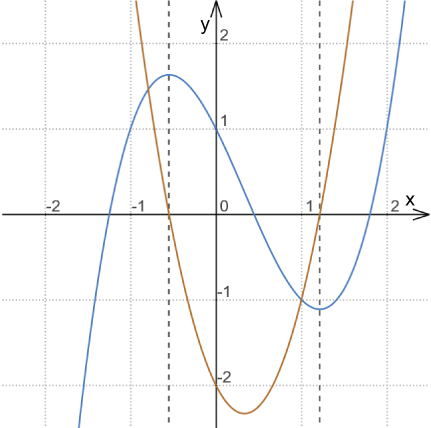 Figure 6.5 A cubic polynomial (two bumps, three roots) and its derivative, which is a quadratic polynomial (two roots)
However, a root of the derivative does not always correspond to an extremum of the original function. Figure 6.6 shows a scenario where the derivative has a root, but it does not intersect the axis, indicating that the cubic polynomial does not have an extremum at that point.
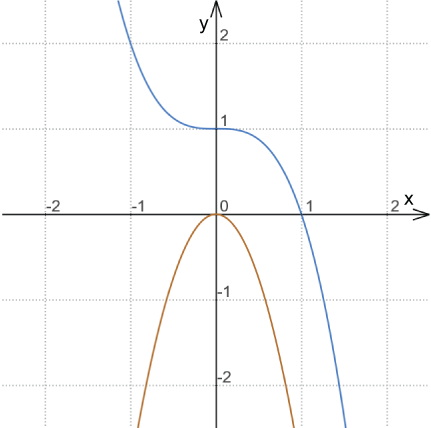 Figure 6.6 Still a cubic polynomial and its quadratic derivative. The derivative has a root, but it doesn’t intersect the axis, so the cubic doesn’t have an extremum.
Conclusion
The concept of roots is fundamental in understanding the behavior of polynomials. The number of roots is determined by the degree of the polynomial, and the roots are the points where the polynomial intersects the x-axis. The derivative of a polynomial can provide additional insights into the nature of these roots and the behavior of the polynomial.
FAQ (Frequently asked questions)
What is a root of a polynomial?
How does the degree of a polynomial relate to the number of roots?
How many times can a quadratic polynomial intersect the x-axis?
What is a root in the context of a polynomial equation?
Where are the roots of the equation ax^2 + bx + c = 0 located?